Japan Air Lines Flight 123
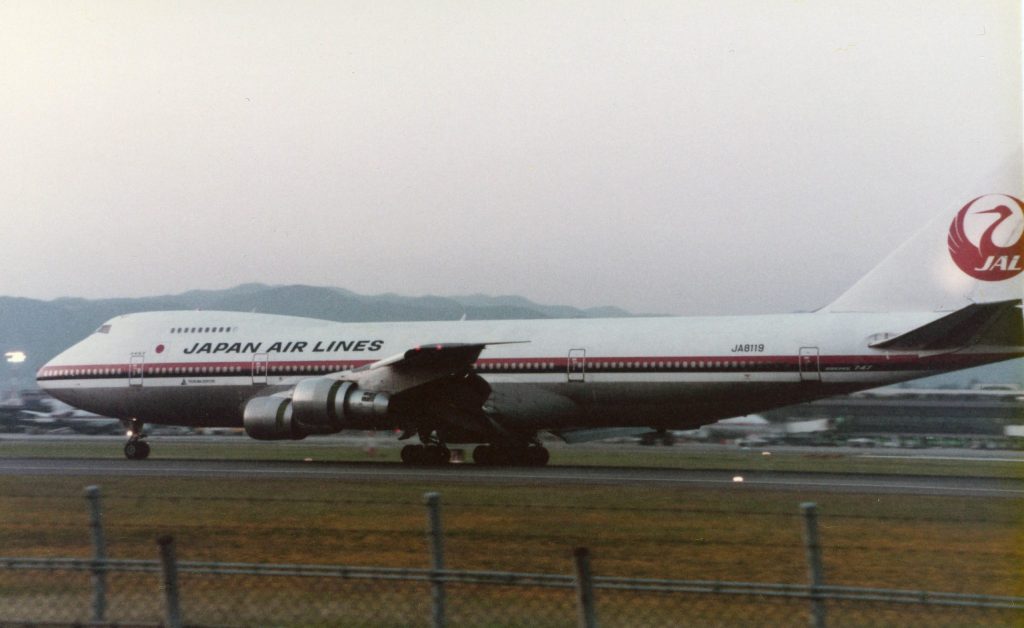
On 12 August 1985 Japan Air Lines Flight 123, a Boeing 747 flying from Tokyo to Osaka with 524 people on board, lost most of its tail fin and all four hydraulic systems when its rear pressure bulkhead burst, 12 minutes after takeoff. The crew kept it flying for more than 30 minutes using engine power before it struck a mountain ridge in Gunma Prefecture, and 520 people were killed; four passengers survived.
The sequence of events
-
Watch this moment · 0:11
A tail strike at Osaka
JA8119 struck its tail landing at Osaka's Itami Airport. In the repair that followed, one section of the rear pressure bulkhead was joined with a single row of rivets where two rows were required.
-
18:12 JST
Takeoff from Haneda
Flight 123 took off from runway 15L for Osaka, with the captain in the right seat training the co-pilot, who was flying from the left seat.
-
18:24:35 JST
A loud bang near 24,000 feet
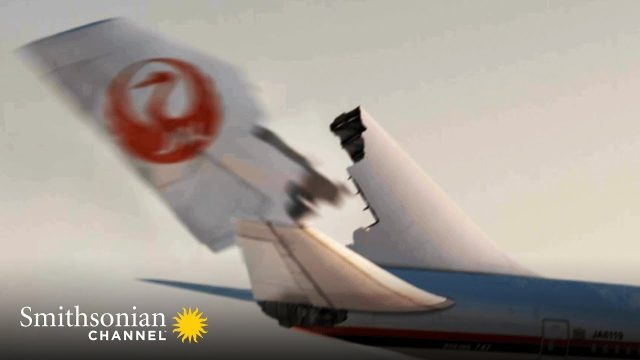
As the aircraft approached cruising height off the Izu Peninsula, the weakened bulkhead burst. Cabin air blew into the tail, tore away most of the vertical fin and severed all four hydraulic systems.
-
18:28:35 JST
"Now uncontrollable"
With no working rudder, elevators or ailerons, the 747 swung through phugoid and dutch roll motions. The crew answered Tokyo Control that the aircraft was uncontrollable and tried to steer with engine thrust.
-
18:41 JSTapproximately
A descent near Mount Fuji
After passing north of Mount Fuji, the aircraft began to descend from about 21,000 feet, turning a full circle to the right over Otsuki in Yamanashi Prefecture.
-
18:55:05 JST
Last contact
Tokyo Approach told the crew that both Haneda and the US air base at Yokota were available. There was no further response from the aircraft.
-
Watch this moment · 6:48
18:56 JSTapproximately
The crash on the ridge
The aircraft hit trees and a ridge, then crashed on a forested ridge at about 1,565 metres, 2.5 km north-northwest of Mount Mikuni. Rescuers reached the site the next morning and found four survivors.
Key facts
| Aircraft | Boeing 747 |
|---|---|
| Aircraft variant | Boeing 747SR-100, JA8119 |
| Flight number | 123 |
| People who died | 520 |
| People on board | 524 |
| Were there survivors? | Yes |
| Phase of flight | Cruise |
Official finding · Aircraft Accident Investigation Commission, Ministry of Transport, Japan
rupture of the aft pressure bulkhead, weakened by fatigue cracks from an improper repair in 1978, and the subsequent ruptures of part of the fuselage tail, the vertical fin and the hydraulic flight control systems, which degraded the aircraft's flying quality and removed its primary flight controls; the cracks not being found in later inspections contributed.
More coverage
-
Smithsonian Channel Aviation Nation
Japan Air Lines Flight 123: How the Bulkhead Burst Took the Tail
-
Fascinating Horror
Japan Air Lines Flight 123: The Faulty Repair Behind 520 Deaths

Questions and answers
What caused the crash of Japan Air Lines Flight 123?
The aircraft's rear pressure bulkhead burst in flight. Japan's investigators found that it had been weakened by fatigue cracks along a joint that was repaired incorrectly after a tail strike in 1978: part of the joint was held by one row of rivets instead of two. The escaping cabin air destroyed most of the tail fin and cut all four hydraulic systems, so the pilots lost their primary flight controls.
How many people died on JAL 123?
520 of the 524 people on board were killed: all 15 crew and 505 of the 509 passengers. Four passengers survived. It remains the deadliest accident involving a single aircraft.
How did the pilots fly the 747 without hydraulics?
They used differential engine thrust and the landing gear to try to control the aircraft, which kept climbing and descending in long phugoid cycles and rolling from side to side. The investigators found that a safe landing was next to impossible in that condition.
Who carried out the faulty repair?
The 1978 repair was done by Boeing under contract to Japan Air Lines. The repair plan was found to be proper, but the work carried out used a splice plate narrower than required and a filler, leaving part of the joint with a single row of rivets. Later inspections did not find the cracks that grew from it.
What changed after Japan Air Lines Flight 123?
The NTSB made recommendations to the FAA on the 747's tail, hydraulic systems, bulkhead design, repair procedures and inspections. According to the Japanese report, a cover was fitted to the opening into the vertical fin on all 747s in service by the end of 1985, so that air from a failed bulkhead could not burst the fin, and Japan Air Lines added fuses to the hydraulic systems of its 747s so that such damage could not drain them all. Bulkhead repairs were inspected across the fleet, and eddy current inspections were added. The report also called for flight recorders that survive impact better and record for longer.
Sources: The facts and written text on this page come from the 3 videos on this page, by Disaster Breakdown, Smithsonian Channel Aviation Nation, Fascinating Horror.