TWA Flight 800
TWA Flight 800, a Boeing 747-131 bound from New York to Paris, broke apart off Long Island on 17 July 1996, about 12 minutes after takeoff, when fuel vapour in its nearly empty centre wing tank exploded. All 230 people on board were killed, and the investigation led to new rules on fuel tank wiring and to nitrogen inerting systems in airliner fuel tanks.
The sequence of events
All times local
-
Afternoon
A long wait at JFK
The 747 arrived from Athens with its centre wing tank almost empty. Delays kept it at the gate with the air conditioning packs, mounted directly beneath that tank, running for hours on a warm day.
-
20:19approximately
Takeoff for Paris
With 212 passengers and 18 crew, Flight 800 took off from runway 22R and climbed east along the Long Island coast.
-
Watch this moment · 16:45
"Crazy fuel flow indicator."
The captain remarked on an erratic fuel flow reading for engine 4. A minute later Boston Center cleared the flight to climb to 15,000 ft.
-
20:31:12
The centre tank explodes
At about 13,800 ft the fuel and air mixture in the centre wing tank ignited. Both recorders and the transponder lost power at the same second, and within seconds the forward fuselage separated.
-
Seconds later
The burning fuselage climbs
The rest of the aircraft pitched up and climbed several thousand feet while trailing burning fuel, then stalled and fell. Many witnesses on shore saw a streak of light followed by a fireball.
-
20:32approximately
Wreckage reaches the sea
The pieces fell into the Atlantic near East Moriches. All 230 people on board were killed.
Key facts
| Aircraft | Boeing 747 |
|---|---|
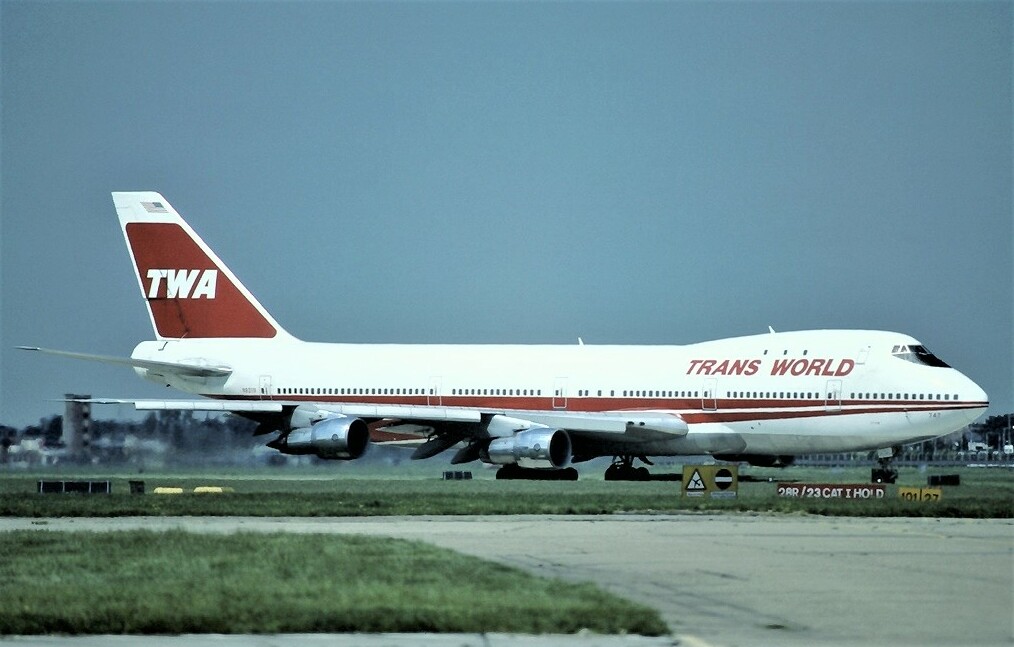
| Aircraft variant | Boeing 747-131, registration N93119 |
| Flight number | 800 |
| People who died | 230 |
| People on board | 230 |
| Were there survivors? | No |
| Phase of flight | Cruise |
Official finding · National Transportation Safety Board (NTSB)
an explosion of the centre wing fuel tank resulting from ignition of the flammable fuel and air mixture in the tank; the ignition source could not be determined with certainty, but the most likely was a short circuit outside the tank that allowed excessive voltage to enter it through wiring associated with the fuel quantity indication system.
More coverage

Questions and answers
What caused TWA Flight 800 to crash?
Fuel vapour in the nearly empty centre wing tank exploded. The NTSB found the most likely ignition source was a short circuit outside the tank that sent excess voltage into the tank through the fuel quantity indication wiring. Heat from the air conditioning packs beneath the tank had made the vapour flammable.
Was TWA Flight 800 shot down by a missile?
No. The wreckage showed no missile or bomb damage, and the FBI closed its criminal investigation without finding evidence of a criminal act. The NTSB concluded that the streak of light many witnesses saw was most likely the burning aircraft itself climbing after the nose separated.
How many people died on TWA 800?
All 230 people on board: 212 passengers, 2 pilots, 2 flight engineers and 14 flight attendants.
Why was an empty fuel tank dangerous?
An almost empty tank holds a mixture of fuel vapour and air that can ignite much more easily than liquid fuel. On TWA 800 the centre tank held only a small amount of unusable fuel, and the packs underneath had been warming it for hours.
What changed after TWA 800?
The FAA's SFAR 88 rules required airlines and manufacturers to find and remove ignition sources in fuel tanks, wiring inspection and separation standards were tightened, and new and existing airliners were required to have systems that fill fuel tanks with nitrogen-enriched air so the vapour cannot ignite.
Sources: The facts and written text on this page come from the 2 videos on this page, by Final Descent, Mentour Pilot.