Aloha Airlines Flight 243
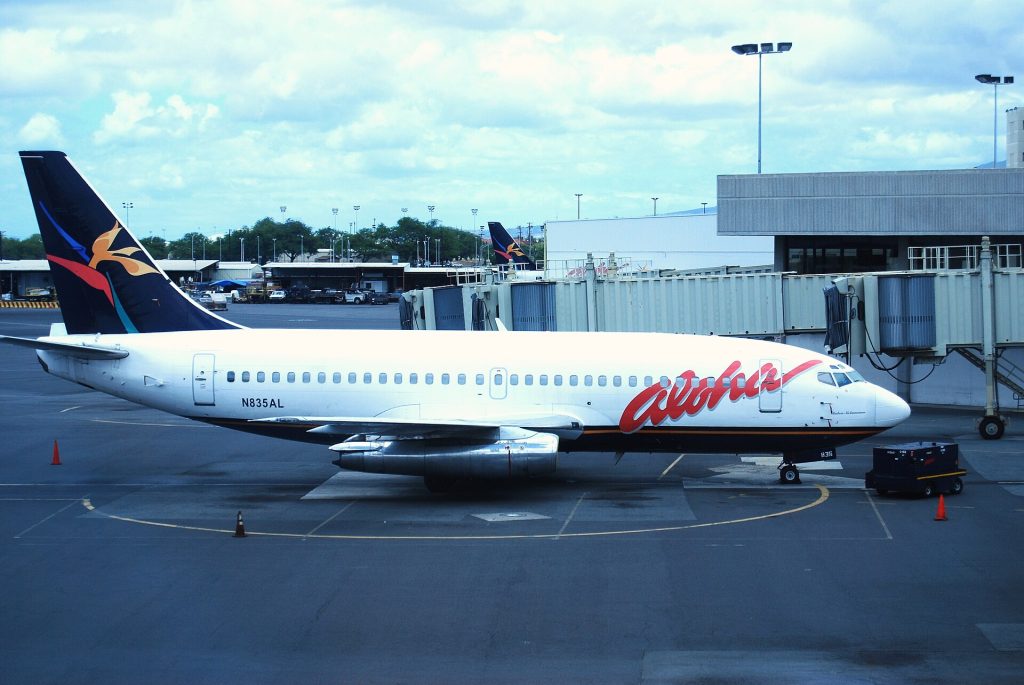
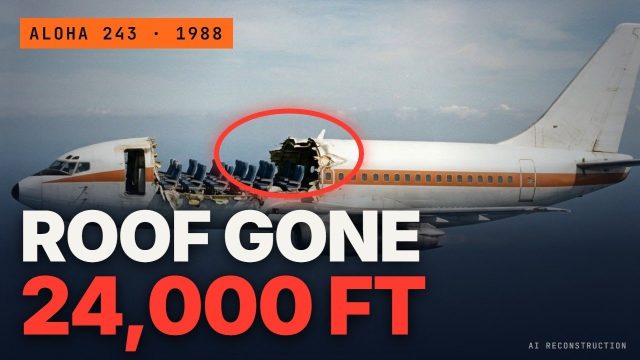
On 28 April 1988 about 18 feet of the upper fuselage of an Aloha Airlines Boeing 737 tore away at 24,000 feet between Hilo and Honolulu, after fatigue cracks along a lap joint linked up. The crew landed at Kahului on Maui 13 minutes later, and 94 of the 95 people on board survived, but flight attendant Clarabelle "C.B." Lansing was swept out of the aircraft and never found.
The sequence of events
-
Watch the video
13:25 HST
Departure from Hilo
Flight 243 took off from Hilo on the Big Island for Honolulu, the aircraft's ninth flight of the day, with 89 passengers and 6 crew (including an FAA air traffic controller in the cockpit jump seat).
-
Watch the video
13:46 HST
Explosive decompression
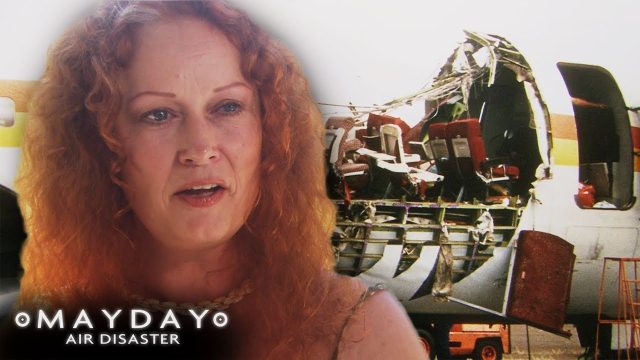
Levelling at 24,000 feet, about 23 nautical miles from Maui, a section of the cabin roof and walls about 18 feet long separated, from just behind the cockpit almost to the wings. C.B. Lansing, standing near row 5, was swept overboard.
-
Watch this moment · 10:00
13:47approximately
Emergency descent toward Maui
Captain Robert Schornstheimer took control from First Officer Madeline "Mimi" Tompkins and began an emergency descent toward Kahului. The crew could not talk to the cabin, and the wind noise made it hard to talk to each other.
-
Watch this moment · 20:42
13:50–13:57approximately
Engine and gear problems
The left engine failed and would not restart. When the gear was lowered, the nose gear light did not come on, and the crew decided to land without confirmation rather than risk the damaged structure.
-
Watch this moment · 6:26
Landing at Kahului
The 737 touched down normally on runway 02, and the nose gear held. Passengers left by the slides. Eight people had been seriously injured, seven passengers and one flight attendant.
Key facts
| Aircraft | Boeing 737 |
|---|---|
| Aircraft variant | Boeing 737-200, N73711 |
| Flight number | 243 |
| People who died | 1 |
| People on board | 95 |
| Were there survivors? | Yes |
| Phase of flight | Cruise |
Official finding · US National Transportation Safety Board (NTSB/AAR-89/03)
The failure of the Aloha Airlines maintenance program to detect significant disbonding and fatigue damage, which led to failure of the lap joint at S-10L and separation of the fuselage upper lobe, with Aloha management, FAA oversight and Boeing's handling of early cold-bond lap joint problems contributing.
Further reading
-
When a repair or a part gave way
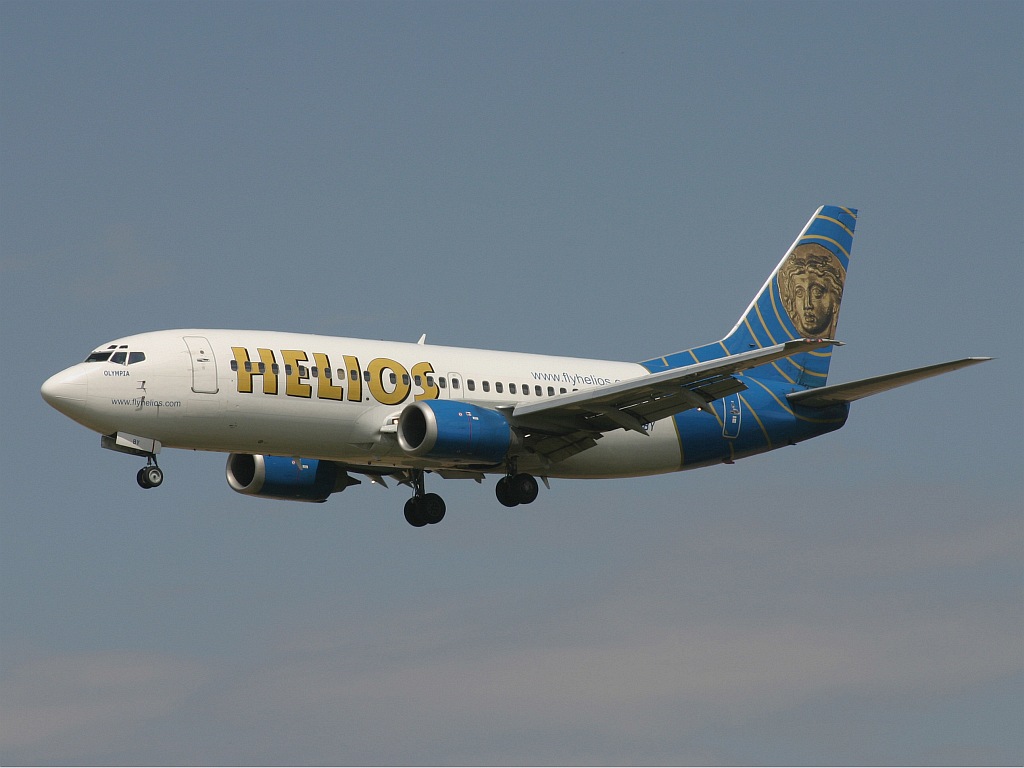
Four flights where a mistake made on the ground, or a part that was not what it should have been, surfaced in the air. Three crews got their aircraft down, but Helios Airways Flight 522 crashed north of Athens with the loss of all 121 people on board. Each investigation traced the problem to work on the ground and the checks that should have caught it.
-
When the pilots saved the plane
Four documentaries about crews who kept a failing airliner flying long enough to land it. They cover two fuel emergencies, a jammed elevator and a fuselage torn open in flight, and the investigations that followed. Everyone on the first three flights survived, and 94 of the 95 people on Aloha Flight 243 lived.
More coverage
-
Mayday: Air Disaster
Aloha Airlines Flight 243: Fatigue Cracks and the NTSB Inquiry
What changed afterwards
It changed how ageing aircraft are inspected, with attention to flight cycles and to many small cracks that can link up, not only single large ones. The FAA began an ageing aircraft research programme, and Congress passed the Aviation Safety Research Act of 1988 and the Aging Aircraft Safety Act of 1991.
Questions and answers
What caused the roof of Aloha Flight 243 to come off?
Along a lap joint on the left side of the fuselage, where two skin panels overlap, the bonding adhesive had come apart and corrosion had set in. The rivets were then carrying loads they were not designed to carry alone, and small fatigue cracks grew from many rivet holes in a row. When they linked up, the tear ran past the tear straps that should have stopped it.
How old was the aircraft?
It was built in 1969 and was 19 years old, but its age in flights mattered more. Short inter-island hops meant it had made 89,680 flights, each a full pressurisation cycle. Only one 737 in the world had made more, and it also belonged to Aloha.
Who died on Aloha Airlines Flight 243?
Senior flight attendant Clarabelle "C.B." Lansing, 58, who had flown with Aloha for 37 years, was swept out of the aircraft and never found. All 94 others on board survived. A memorial garden at Honolulu airport is named after her.
Did anyone see the crack before take-off?
Yes. A boarding passenger later told investigators she had seen a crack in the fuselage skin by the door, but she did not report it before the flight.
What changed afterwards?
It changed how ageing aircraft are inspected, with attention to flight cycles and to many small cracks that can link up, not only single large ones. The FAA began an ageing aircraft research programme, and Congress passed the Aviation Safety Research Act of 1988 and the Aging Aircraft Safety Act of 1991.
Sources: The facts and written text on this page come from the 3 videos on this page, by Wonder, Mayday: Air Disaster, Mayday 247.