American Airlines Flight 191
On 25 May 1979 the left engine and pylon of American Airlines Flight 191, a DC-10 bound for Los Angeles, tore away from the wing as it lifted off from Chicago O'Hare, damage that maintenance work had caused weeks earlier. The aircraft rolled over and crashed just beyond the airport 31 seconds later, killing all 271 people on board and two people on the ground.
The sequence of events
All times Central Daylight Time (CDT)
-
Watch this moment · 7:45
Maintenance at Tulsa
At American Airlines' maintenance base in Tulsa, the left engine and its pylon were removed from the wing together, supported by a forklift, and later refitted. The pylon's rear bulkhead was cracked in the process.
-
Watch this moment · 3:03
15:04 CDTapproximately
The left engine separates
Taking off from runway 32R in clear weather, with 271 people on board for Los Angeles, the aircraft was rotating when the left engine and pylon and about 3 feet of the wing's leading edge broke away and fell onto the runway. Hydraulic and electrical lines in the wing were cut.
-
Watch this moment · 17:45
About 20 seconds after liftoffapproximately
The left wing stalls
The slats on the outer left wing had retracted, raising that wing's stall speed. As the crew slowed to the engine-out climb speed at about 325 feet, the left wing stalled and the aircraft began to roll left.
-
Watch this moment · 0:11
The crash
Rolling past the vertical with its nose dropping, the DC-10 struck an open field about 4,600 feet beyond the end of the runway, and wreckage scattered into an adjacent trailer park.
-
6 June 1979
The DC-10 is grounded
After inspections found damaged pylons on other aircraft, the FAA suspended the DC-10's type certificate, grounding the type in the United States.
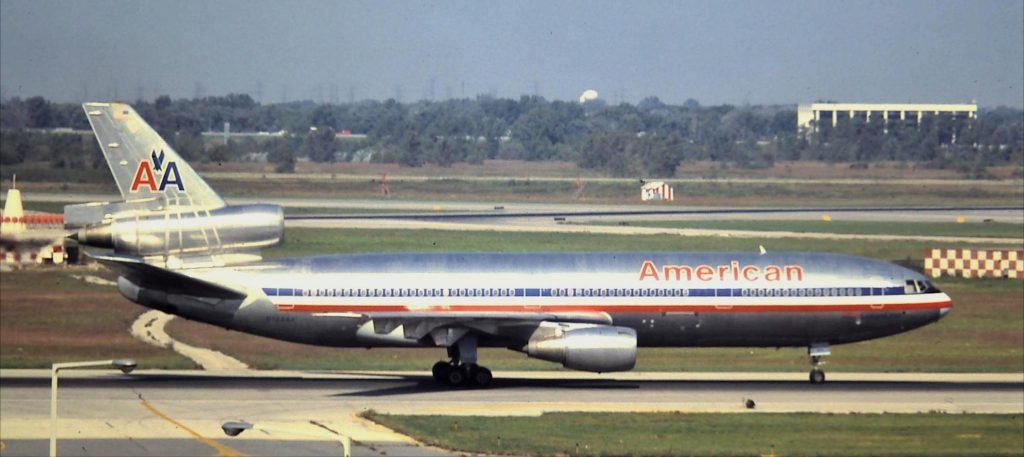
Key facts
| Aircraft | McDonnell Douglas DC-10 |
|---|---|
| Aircraft variant | McDonnell Douglas DC-10-10, N110AA |
| Flight number | 191 |
| People who died | 273 |
| People on board | 271 |
| Were there survivors? | No |
| Phase of flight | Takeoff |
Official finding · National Transportation Safety Board (NTSB)
the asymmetrical stall and the ensuing roll of the aircraft because of the uncommanded retraction of the left wing outboard leading edge slats and the loss of stall warning and slat disagreement indication systems, resulting from maintenance-induced damage leading to the separation of the No. 1 engine and pylon assembly at a critical point during takeoff.
More coverage
-
Mayday: Air Disaster
American Airlines Flight 191: Mayday on the O’Hare DC-10 Inquiry
-
Fascinating Horror
American Airlines Flight 191: The 1979 Crash That Grounded DC-10s

Questions and answers
Why did the engine fall off American Airlines Flight 191?
Weeks earlier, mechanics had removed the left engine and its pylon together, using a forklift, instead of removing the engine first as the manufacturer recommended. The NTSB found that this procedure cracked the pylon's rear bulkhead. The crack grew in service until the pylon failed during takeoff.
Could a DC-10 fly with one engine missing?
Yes. The aircraft could have flown on its two remaining engines. What made it uncontrollable was the damage to the wing: the separating pylon cut hydraulic lines and the slats on the left wing retracted, so that wing stalled at the speed the crew had been trained to fly after an engine failure. The captain's stall warning had also lost power, so the crew had no warning.
How many people died on Flight 191?
All 271 people on board, 258 passengers and 13 crew, and two people on the ground: 273 in all. It is the deadliest aviation accident on US soil.
Was the DC-10 grounded after the crash?
Yes. On 6 June 1979 the FAA suspended the DC-10's type certificate after inspections found damaged pylons on other aircraft, grounding the type in the United States. It was restored after the inspections. Read more in our guide to DC-10 crashes.
What changed after American Airlines Flight 191?
The NTSB found that the design of the pylon attachment points was vulnerable to maintenance damage, that the slat design allowed the asymmetry that caused the stall, that FAA surveillance had not detected the improper maintenance procedure, and that airlines, the manufacturer and the FAA had not shared what they knew about earlier maintenance damage. It also found that the operating procedures were not tolerant of this unique emergency.
Sources: The facts and written text on this page come from the 3 videos on this page, by Mentour Pilot, Mayday: Air Disaster, Fascinating Horror.