Tenerife airport disaster
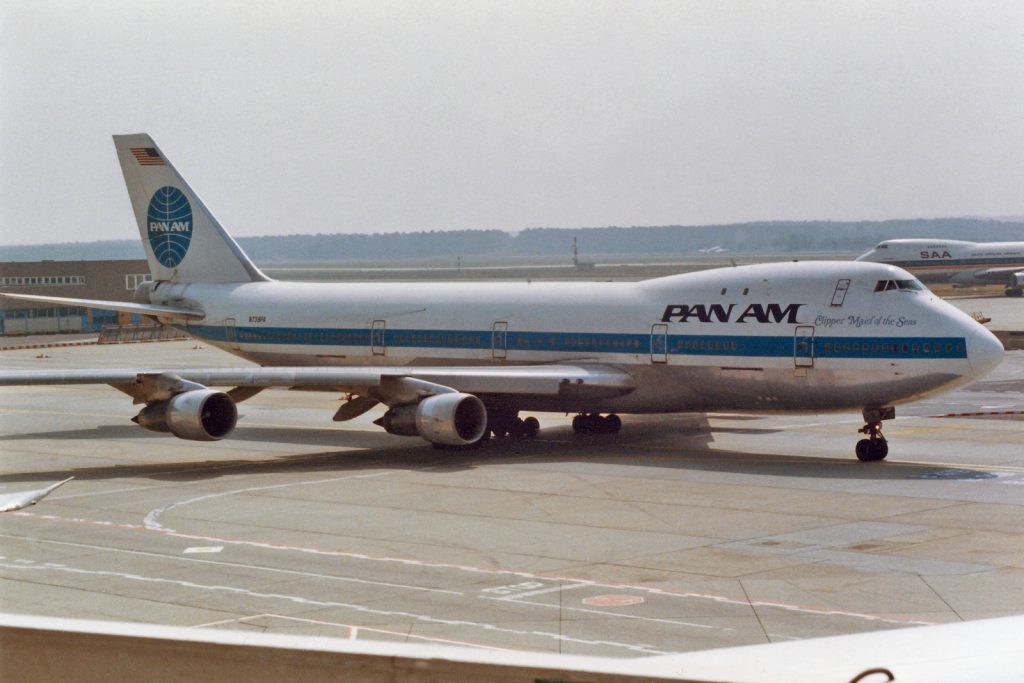
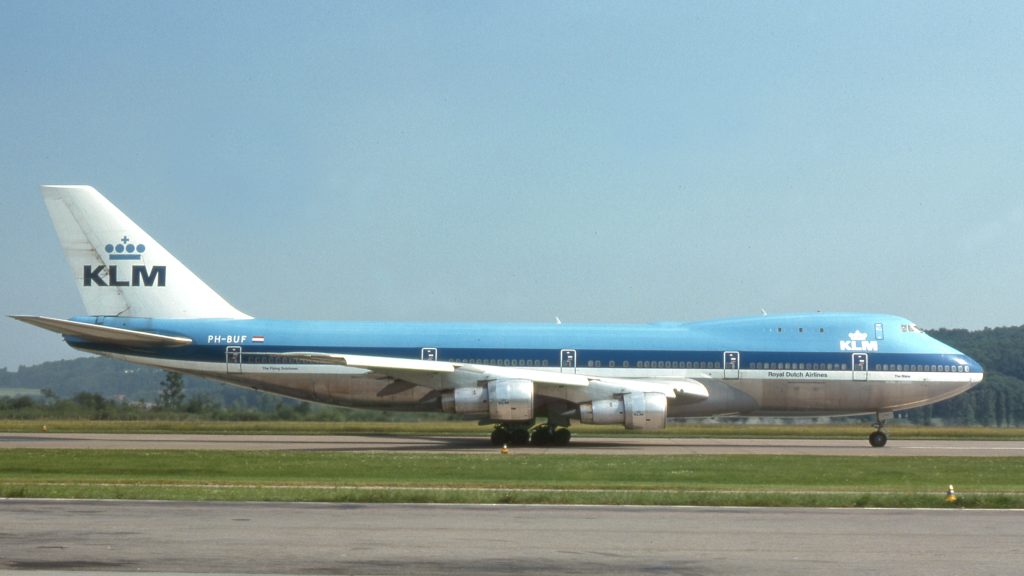
Two Boeing 747s, KLM Flight 4805 and Pan Am Flight 1736, collided in fog on the runway at Los Rodeos Airport on Tenerife on 27 March 1977, after both had been diverted there by a bomb at Las Palmas. The KLM jet began its takeoff without clearance and struck the Pan Am aircraft as it taxied on the same runway, killing 583 people, the deadliest accident in aviation history; 61 people on the Pan Am aircraft survived.
The sequence of events
All times local
-
Watch this moment · 1:47
Diverted to Los Rodeos
A bomb exploded in the terminal at Las Palmas, Gran Canaria, and the threat of a second device closed the airport. KLM 4805 from Amsterdam and Pan Am 1736 from Los Angeles and New York were among dozens of flights diverted to the small airport on Tenerife, where parked aircraft filled the taxiway.
-
Mid-afternoon
Refuelling blocks the way
When Las Palmas reopened, the Pan Am crew were ready to leave, but the KLM 747, refuelling to save time later against strict new Dutch duty-time limits, blocked their path to the runway.
-
Watch this moment · 1:45
Both 747s backtrack in fog
With the taxiway full, the tower sent KLM down the runway to turn around at the far end, and told Pan Am to follow and leave the runway at the third exit. Cloud rolled across the airfield and visibility fell to a few hundred metres; the tower had no ground radar.
-
17:05:53
A route clearance, not a takeoff clearance
The controller gave KLM its route clearance after departure. At 17:06:09 the KLM first officer read it back and added "we are now at takeoff" as the captain began the takeoff roll.
-
17:06:18
Two calls cancel each other out
The tower replied "okay, stand by for takeoff, I will call you" while the Pan Am crew transmitted that they were still taxiing on the runway. The simultaneous calls produced a squeal on the KLM frequency. The KLM flight engineer asked whether Pan Am was clear; the captain said it was.
-
Watch this moment · 4:20
Collision
The Pan Am crew saw the KLM landing lights and turned hard left. The KLM 747 lifted off but struck the top of the Pan Am fuselage, crashed further down the runway and burned. All 248 people on the KLM aircraft and 335 on the Pan Am aircraft were killed; 61 people on the Pan Am aircraft survived.
Key facts
| Aircraft | Boeing 747 |
|---|---|
| Aircraft variant | Boeing 747-206B PH-BUF (KLM) and Boeing 747-121 N736PA (Pan Am) |
| Flight number | 4805 |
| People who died | 583 |
| People on board | 644 |
| Were there survivors? | Yes |
| Phase of flight | Takeoff |
Official finding · Subsecretaría de Aviación Civil, Spain
the fundamental cause was that the KLM captain took off without clearance, did not obey the tower's "stand by for takeoff", did not abort when Pan Am reported it was still on the runway, and replied emphatically that Pan Am was clear when his flight engineer asked.
More coverage
-
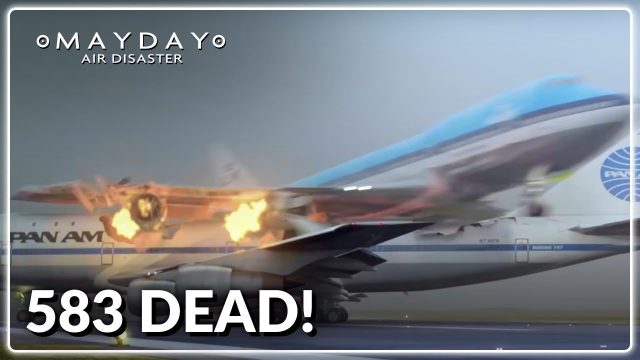
Mayday: Air Disaster
Tenerife Airport Disaster: The Radio Calls Behind 583 Deaths
Questions and answers
How many people died in the Tenerife airport disaster?
583 people: all 248 on board KLM Flight 4805 and 335 of the 396 on board Pan Am Flight 1736. 61 people on the Pan Am aircraft, including its cockpit crew, survived. It remains the deadliest accident in aviation history.
Why were the two 747s at Tenerife?
Both were flying to Las Palmas on Gran Canaria. A bomb exploded in the terminal there, and the airport was closed because of the threat of a second device, so flights were diverted to Los Rodeos on Tenerife.
Why did the KLM 747 take off without clearance?
The controller gave the KLM crew their route clearance, which included the words "after takeoff". The captain began the takeoff as the first officer was reading it back. The tower's "stand by for takeoff" and Pan Am's report that it was still on the runway were transmitted at the same time and blocked each other. Investigators also pointed to pressure from new Dutch duty-time limits.
Why was the Pan Am 747 still on the runway?
The crew had been told to leave at the third exit, which in fog required two very sharp turns, tighter than 90 degrees, for a 747. They appear to have been heading for the fourth exit, which had an easier angle, when they saw the KLM aircraft coming.
What changed after Tenerife?
Controllers and pilots now use the word "takeoff" only when a takeoff clearance is actually given or cancelled, and use "departure" otherwise. The accident also helped lead to crew resource management (CRM) training, which teaches crews to speak up and challenge a captain.
Sources: The facts and written text on this page come from the 2 videos on this page, by Pilot Pulse, Mayday: Air Disaster.