Air France Flight 447
On 1 June 2009 Air France Flight 447, an Airbus A330 flying overnight from Rio de Janeiro to Paris, stalled at 38,000 feet over the Atlantic after ice crystals blocked its airspeed probes and the autopilot disconnected. It struck the ocean four and a half minutes later, and all 228 people on board were killed.
The sequence of events
-
Watch this moment · 1:28
Takeoff from Rio de Janeiro
Flight AF 447 took off from Rio de Janeiro Galeão (19:29 local time) for Paris Charles de Gaulle with 216 passengers and 12 crew. The captain was monitoring and one of the two co-pilots was flying.
-
01:35 UTC
Out of radar cover
At the INTOL point the crew left Recife control for HF radio with the Atlántico oceanic centre. An attempt to log on to Dakar's automatic position-reporting system failed.
-
Watch this moment · 22:39
02:00 UTCapproximately
The captain leaves for his rest
The captain woke the second co-pilot, sat in on a short briefing and left the cockpit. The aircraft was in cloud at 35,000 feet, with turbulence expected ahead.
-
Watch this moment · 26:05
The autopilot disconnects
The airspeed readings dropped as the pitot probes iced over, and the autopilot and autothrust disconnected. The pilot flying made a nose-up input and the aircraft began to climb.
-
Watch this moment · 36:57
The stall warning sounds continuously
The pilot flying kept pulling up and selected take-off/go-around thrust. The trimmable stabiliser moved to 13 degrees nose-up, and the aircraft entered a stall it never recovered from.
-
Watch this moment · 41:42
02:11:42 UTCapproximately
The captain returns
The captain came back to the cockpit. The aircraft was descending at about 10,000 feet per minute with an angle of attack above 40 degrees.
-
02:14:28 UTC
The recordings stop
The aircraft struck the sea descending at almost 11,000 feet per minute, with its nose 16 degrees up. No emergency message was sent.
-
Watch this moment · 51:02
The wreckage is found
The fourth search phase found the wreckage 3,900 metres down, about 6.5 nautical miles from the last position the aircraft had reported. The flight recorders were brought up on 1 and 2 May 2011.
Key facts
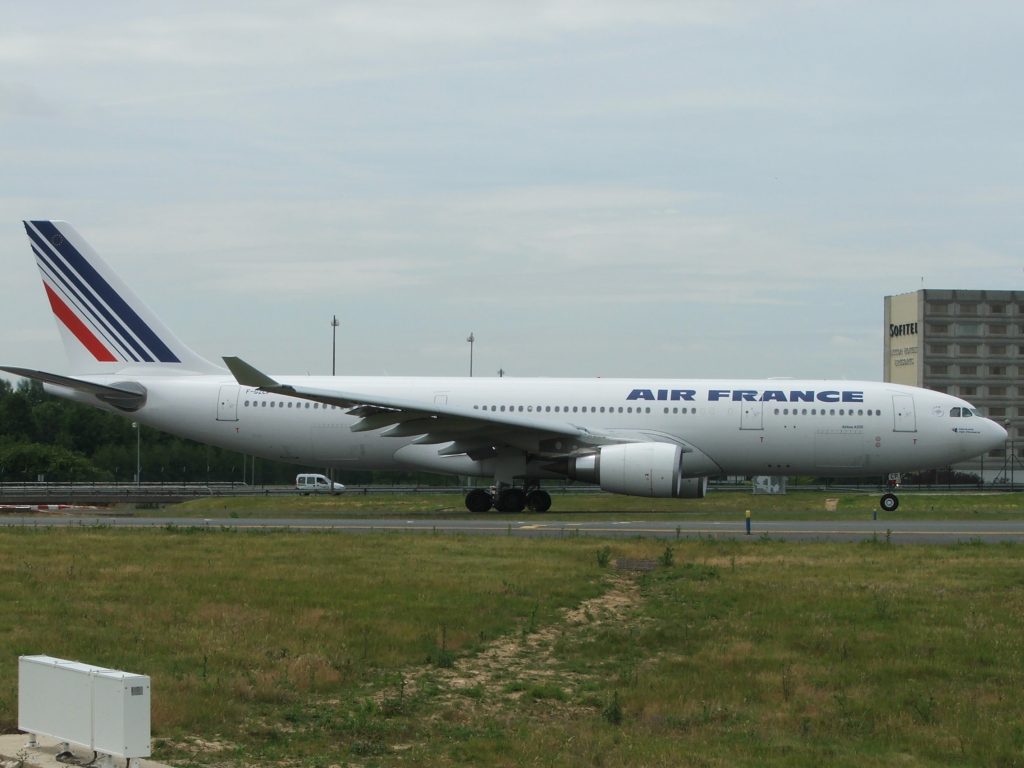
| Aircraft | Airbus A330 |
|---|---|
| Aircraft variant | Airbus A330-203, F-GZCP |
| Flight number | 447 |
| People who died | 228 |
| People on board | 228 |
| Were there survivors? | No |
| Phase of flight | Cruise |
Official finding · Bureau d'Enquêtes et d'Analyses pour la sécurité de l'aviation civile (BEA), France
the pitot probes were obstructed by ice crystals, which caused inconsistent airspeed readings, the autopilot disconnection and the change to alternate law; the crew then made control inputs that destabilised the flight path, did not link the lost speeds to the correct procedure, and neither identified nor recovered from the stall that followed.
More coverage
-
Mayday: Air Disaster
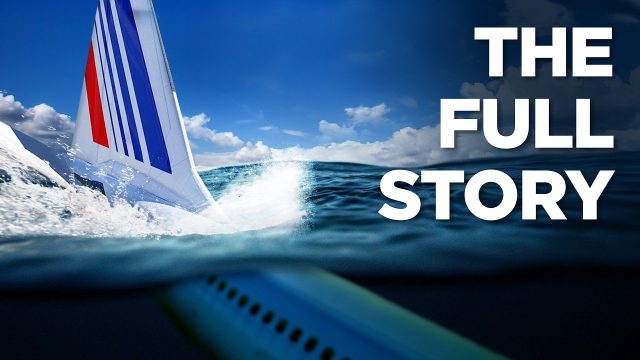
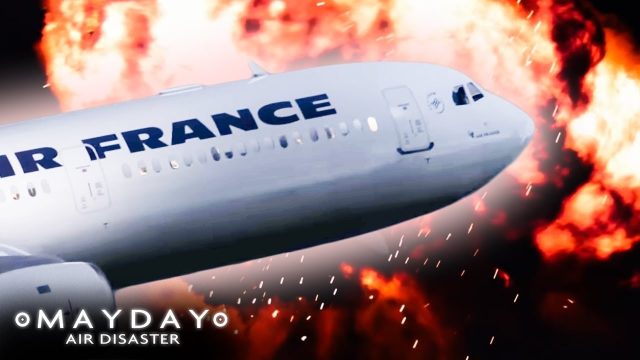
Air France Flight 447: Mayday and the Search for the Recorders
Questions and answers
What caused Air France Flight 447 to crash?
Ice crystals blocked the aircraft's pitot probes at cruising height, so the airspeed readings became unreliable and the autopilot disconnected. The BEA found that the pilot flying then pulled the nose up, the crew did not apply the procedure for unreliable airspeed, and the aircraft climbed, slowed and stalled. The crew never recognised the stall, and the aircraft fell for more than three and a half minutes until it hit the ocean.
Why did the pilots not recognise the stall?
The BEA found that the crew likely never understood that they were facing a simple loss of three airspeed sources. The stall warning sounded continuously for 54 seconds and then stopped when the measured speed fell so low that the computers treated it as invalid, so it came back on when the nose was lowered. The report also pointed to the lack of training in manual handling at high altitude and in recognising an approach to a stall.
How many people died on Air France 447?
All 228 people on board: 216 passengers, 3 pilots and 9 cabin crew. The bodies of 104 victims were recovered from the seabed in 2011.
Why did it take two years to find the flight recorders?
The aircraft came down in the middle of the Atlantic, far from radar cover, in water about 4,000 metres deep over rugged terrain. The locator beacons on the recorders stopped transmitting before they were heard. The wreckage was finally found on 2 April 2011 during the fourth search phase, and both recorders were recovered in May 2011 with their data intact.
What changed after Air France 447?
The BEA's recommendations covered flight recorders and how to locate them at sea, crew training in manual flying at high altitude and in stall recovery, the presentation of stall warnings and angle of attack, and search and rescue in the South Atlantic. Air France was already replacing the type of pitot probe fitted to F-GZCP when the accident happened.
Sources: The facts and written text on this page come from the 3 videos on this page, by Smithsonian Channel Aviation Nation, Mentour Pilot, Mayday: Air Disaster.