Delta Air Lines Flight 1080
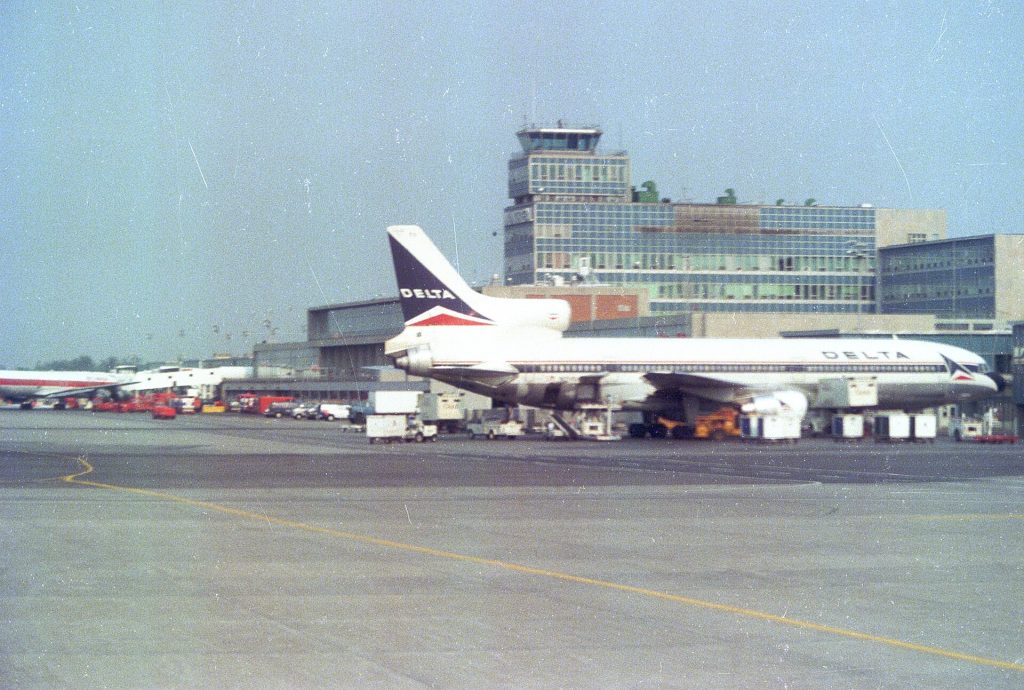
On 12 April 1977 a Delta Air Lines Lockheed L-1011 TriStar pitched up uncontrollably after take-off from San Diego, because its left elevator had jammed fully up. Captain Jack McMahan controlled it with engine thrust and landed safely at Los Angeles, and all 52 people on board were unhurt.
The sequence of events
All times Pacific Standard Time (PST)
-
Watch the video
23:53 PST
Take-off from San Diego
Flight 1080, with 41 passengers and 11 crew, began its take-off on runway 27 for a short hop to Los Angeles, the first leg of an overnight trip to Atlanta. Cloud lay from 800 to 9,000 feet.
-
Watch this moment · 8:00
The nose rises by itself
Just after V1, the nose began to rise before the captain pulled back. Even with full forward control column and full nose-down trim, the TriStar kept pitching up, with its airspeed falling toward a stall.
-
Watch this moment · 17:59
Minutes after take-offapproximately
Thrust used for pitch
Captain McMahan pulled back the wing engines and pushed the tail engine to full power. The nose came down and the airspeed recovered. Unequal thrust also countered a steady roll to the left.
-
Watch this moment · 24:29
After the climbapproximately
Level at 10,000 feet
After climbing to about 14,000 feet, the crew found a combination of thrust settings that held the aircraft level at about 10,000 feet, at 12 to 14 degrees nose-up. Passengers were moved forward to help the trim.
-
Watch this moment · 30:53
Well after midnightapproximately
Approach to runway 06R
The crew chose Los Angeles and an approach from over the sea, configured in small steps, and kept control through a sharp pitch-up when the landing gear came down.
-
Watch the video
00:45 PST
Landing at Los Angeles
The aircraft broke out of cloud at 700 feet and landed at about 170 knots with 18 degrees of flap. No one was hurt, and no tyres burst.
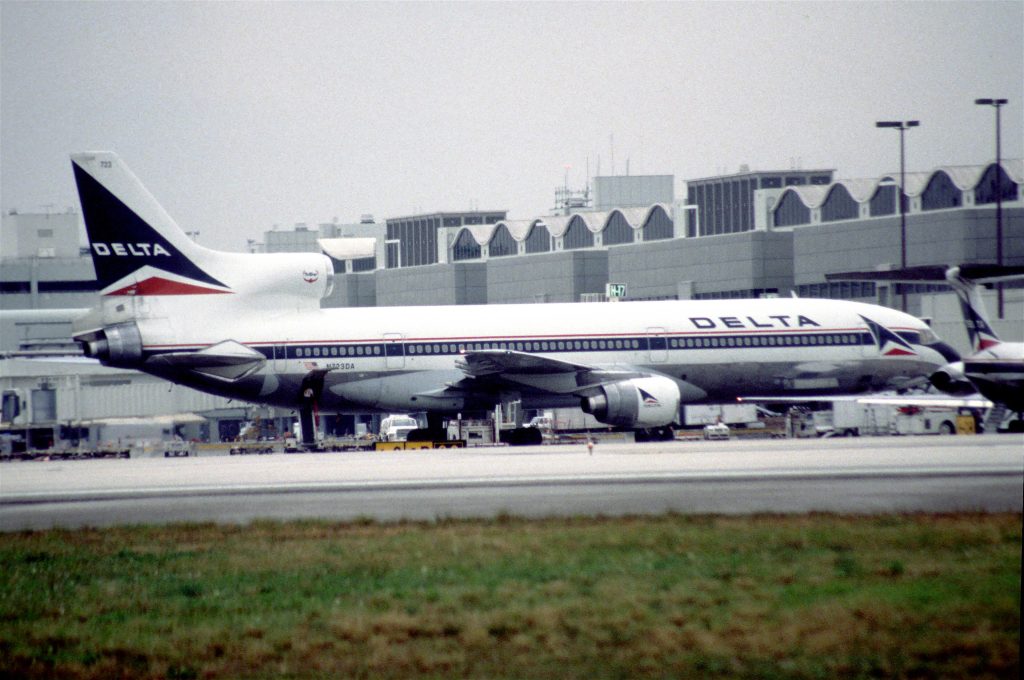
Key facts
| Aircraft | Lockheed L-1011 TriStar |
|---|---|
| Aircraft variant | Lockheed L-1011 TriStar |
| Flight number | 1080 |
| People who died | 0 |
| People on board | 52 |
| Were there survivors? | Yes |
| Phase of flight | Takeoff |
Official finding · US National Transportation Safety Board
The left elevator jammed in the full-up position because moisture, drawn in through repeated pressurisation cycles, had corroded a bearing in the elevator crank.
Further reading
-
When the pilots saved the plane
Four documentaries about crews who kept a failing airliner flying long enough to land it. They cover two fuel emergencies, a jammed elevator and a fuselage torn open in flight, and the investigations that followed. Everyone on the first three flights survived, and 94 of the 95 people on Aloha Flight 243 lived.
What changed afterwards
Lockheed told airlines to fit a deflector to drain water away from the bearing and a seal to keep water out. Later aircraft designs show pilots the position of every flight control, so a jammed surface can be seen.
Questions and answers
What went wrong on Delta Flight 1080?
The left elevator on the TriStar's tail had jammed in the fully up position, which pushed the nose up and made the aircraft roll left. The cockpit had no indication of the failure, so the crew had to work out how to fly the aircraft without knowing what was wrong.
How did the pilots keep control?
Captain Jack McMahan used engine thrust. Reducing power on the two wing engines, which sit below the centre of gravity, brought the nose down, and adding power on the tail engine helped further. Unequal thrust between the wing engines stopped the left roll.
Were the passengers in danger?
Yes, although most did not realise it. The aircraft came close to stalling soon after take-off. All 41 passengers and 11 crew landed unhurt at Los Angeles, and many went on in a replacement TriStar the same night.
What changed afterwards?
Lockheed told airlines to fit a deflector to drain water away from the bearing and a seal to keep water out. Later aircraft designs show pilots the position of every flight control, so a jammed surface can be seen.
Sources: The facts and written text on this page come from the 1 video on this page, by Green Dot Aviation.