American Airlines Flight 191: Mayday on the O’Hare DC-10 Inquiry
The short version
This Mayday episode follows the NTSB investigation into American Airlines Flight 191, the DC-10 that crashed after takeoff from Chicago O'Hare on 25 May 1979, killing 273 people. It traces the broken pylon, the false lead of a failed bolt, the maintenance practice that cracked the pylon and the slat retraction that made the aircraft stall, and the grounding of the DC-10 fleet.
Full written account
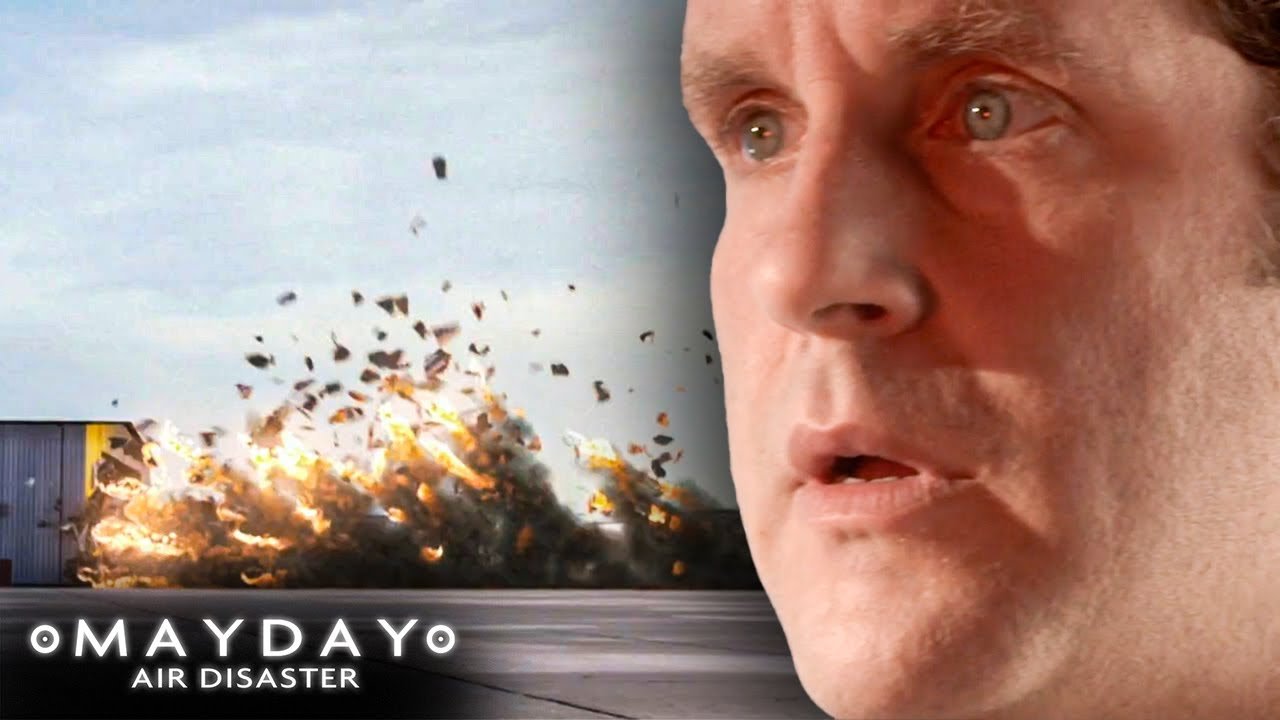
This Mayday episode reconstructs the takeoff of American Airlines Flight 191 and then follows the NTSB investigation in detail, including the false leads. It uses interviews with investigators and the famous photograph of the aircraft banked over the field.
A clear Friday afternoon
On the Friday before Memorial Day 1979, the DC-10 is preparing to take off for Los Angeles with 258 passengers. The captain has about 22,000 hours, about 3,000 of them on the DC-10. At 3:04 p.m. the aircraft is seconds from lifting off when the left engine rotates up and over the wing and falls to the runway. The captain's instruments go dead. Pilots are trained to keep climbing with one engine out, and the aircraft is designed to do so. But the DC-10 rolls further to the left, and witnesses see it flying on its side before it crashes about 4,600 feet beyond the end of the runway.
A stain on the DC-10
All 271 people on board were killed, along with two people on the ground. The episode sets the accident against earlier concerns about the DC-10, including the cargo door failures on American Airlines Flight 96 and Turkish Airlines Flight 981.
The pylon and the bolt
The recorders were damaged, and the cockpit voice recorder had lost power when the engine separated, so the clues had to come from the wreckage. A broken bolt in the pylon looked at first like the answer, and the episode explains why investigators followed that lead and why it turned out not to be the cause. The breakthrough came from the pylon's rear bulkhead, which had a crack and a dent at the point where the crack started.
The maintenance procedure
Investigators followed the trail into the maintenance hangar. American Airlines removed the engine and pylon as a single unit with a forklift, saving about 200 hours of labour. The episode shows how a slightly wrong angle could crack the fittings without anyone noticing. On 6 June 1979 the FAA grounded every DC-10 in the United States, 138 aircraft, and inspectors found more aircraft with damaged pylons.
Why it rolled
The last question was why an aircraft that could fly on two engines went out of control. The investigators found that some slats on the left wing had retracted while those on the right were extended, which raised the left wing's stall speed to 159 knots from 124 knots. The pilots, flying the speed their procedures demanded after an engine failure, were below it, and the warnings that would have told them so had lost power. The episode concludes that the pilots flew exactly as they were trained and did not stand a chance.
Note: the episode describes the two people killed on the ground as workers in a hangar. The NTSB report says two people on the ground were killed and an old hangar was destroyed.
Questions this video answers
What caused American Airlines Flight 191 to crash?
The left engine and its pylon separated just after liftoff. Investigators traced a crack in the pylon's aft bulkhead to maintenance done weeks earlier.
How many people died?
The video gives 271 on board and 273 dead, which includes two workers killed in a hangar. The description gives 273 killed.
What did the FAA do after the crash?
On June 6, 1979, the FAA grounded every DC-10 in the United States, 138 planes in total.
Why couldn't the pilots recover?
The engine's separation severed hydraulic lines so some left-wing slats retracted, and it cut electrical power to the stall warnings. The crew did not know they were stalling.
Were the pilots blamed?
The NTSB concluded the pilots were not at fault. It faulted American Airlines maintenance practices and the FAA for not enforcing proper procedures.
Explore related events
Connected by the topic: McDonnell Douglas DC-10
