Delta Flight 1080: Flying an L-1011 With a Jammed Left Elevator
The short version
Delta Flight 1080 developed severe pitch and roll problems during take-off from San Diego on 12 April 1977, with 52 people on board. Captain Jack McMahan used carefully balanced engine thrust to control the Lockheed TriStar for almost an hour and land safely at Los Angeles. Mechanics then found the left elevator jammed fully up, which the NTSB traced to a corroded bearing.
Full written account
Delta Flight 1080 is one of the clearest cases of a crew flying an airliner with engine thrust after its pitch control was compromised. This video takes the flight minute by minute, from the pre-flight control check in San Diego to a passenger's complaint note after landing.
The crew and the aircraft
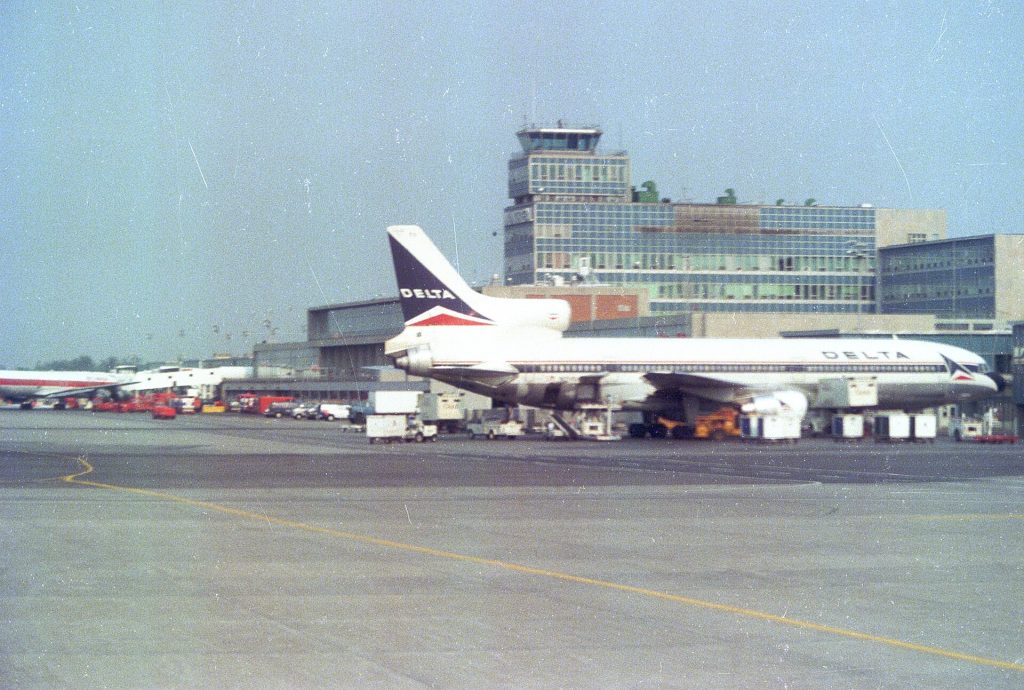
Just before midnight on 12 April 1977, a Lockheed L-1011 TriStar was prepared at San Diego for an overnight trip to Atlanta via Los Angeles, Dallas and New Orleans. Only 41 passengers were on board for the 30-minute first leg, with eight cabin crew and three flight crew. Captain Jack McMahan, 56, had 36 years of flying, including Marine Corps service in the Second World War. He had been co-pilot on Delta's delivery flight of its first TriStar. First Officer Wilbur Radford, 42, had over 10,000 hours. Flight engineer Steven Heidt, 30, was on his first flight as an L-1011 flight engineer. The crew's control check during taxi was normal.
A nose that would not come down
Cleared for take-off at seven minutes to midnight on runway 27, the TriStar passed V1 at 123 knots. Before the captain pulled back, the nose began rising by itself, toward 15 and then 18 degrees. The stabilizer trim was set correctly. The L-1011 has an all-moving tail, a stabilator, and the captain trimmed it fully nose-down. That was the limit. In cloud over the Pacific, with no warning lights, no popped circuit breakers and normal hydraulics, the crew had no clue to the cause. The aircraft also kept rolling left. The nose reached 22 degrees, the speed fell below V2, and a stall was close.
Flying with thrust
McMahan said later that he pictured the aircraft stalling into the sea, and that the crash would be blamed on pilot error. He reasoned that the two wing engines, below the centre of gravity, were pushing the nose up. He pulled them back and pushed the tail engine forward, and the nose came down. Then he balanced the thrust so the airspeed crept back up without the nose rising again, adding power on the left engine to stop the left roll. With both pilots pushing the controls fully forward, the flight broke out above the cloud at 9,000 feet.
Holding altitude
The TriStar kept climbing, and controllers cleared the crew to take any altitude they needed. Near 14,000 feet McMahan brought the wing engines back, the aircraft descended, and with careful thrust changes it settled at 10,000 feet. To stay level it flew slowly at 12 to 14 degrees nose-up, with the throttles widely staggered and a speed window of only about 190 to 200 knots. The crew moved passengers forward to shift the centre of gravity and tried the autopilot, which immediately pitched the aircraft up.
Choosing Los Angeles
Low cloud covered the coast, and the desert airfields were closed at night. Las Vegas and Phoenix meant crossing mountains, with the risk of turbulence. Los Angeles was close, familiar to the captain and had runways pointing out to sea. The crew asked for a long straight approach to runway 06R from over the water, so that if they lost control, the aircraft would come down in the sea, not over the city.
The approach and landing
McMahan configured in small steps. Flaps 4 and then 10 each gave about half an inch more forward travel on the control column. Lowering the gear shifted the centre of gravity and pitched the nose up again, and only full power on the tail engine recovered the glide slope. He disarmed the ground spoilers to avoid a pitch-up on touchdown. The aircraft broke out of cloud at 700 feet in the right place, and he chose to land as it was, at about 170 knots and 18 degrees of flap, without flaring. At about 00:45 the TriStar touched down. Braking brought the nose down, and the crew used reverse thrust on the wing engines only. No one was hurt and no tyres burst.
Afterwards
Most passengers never knew how close it had been. One handed the captain a note complaining about being late for a connection. Mechanics found the left elevator jammed fully up, and the video reports that it had jammed during the control check before take-off. The NTSB determined that moisture had entered the elevator crank through repeated pressurisation cycles and corroded it. Lockheed told operators to fit a deflector and a seal. The crew later received an award for their airmanship.
Questions this video answers
How many people were aboard Delta Flight 1080?
There were 52 people aboard: 41 passengers, eight cabin crew and three flight crew. Everyone survived.
What caused the flight control problem?
The left elevator jammed fully upward. The National Transportation Safety Board determined that moisture had entered the elevator crank through repeated pressurization cycles and corroded it.
How did the pilots control the aircraft?
They combined forward control-column pressure with carefully balanced engine thrust. Increasing thrust on the tail-mounted engine and reducing thrust on the wing-mounted engines helped lower the nose.
Where did Flight 1080 land?
It landed safely on runway 06 right at Los Angeles, at 170 knots with 18 degrees of flap. No passenger was injured.
What changes followed the incident?
Lockheed instructed airlines to install a deflector to drain water away from the bearing and a seal to prevent water entering.
Explore related events
Connected by the topic: Lockheed L-1011 TriStar