Tenerife 1977: How a KLM and a Pan Am 747 Collided in the Fog
The short version
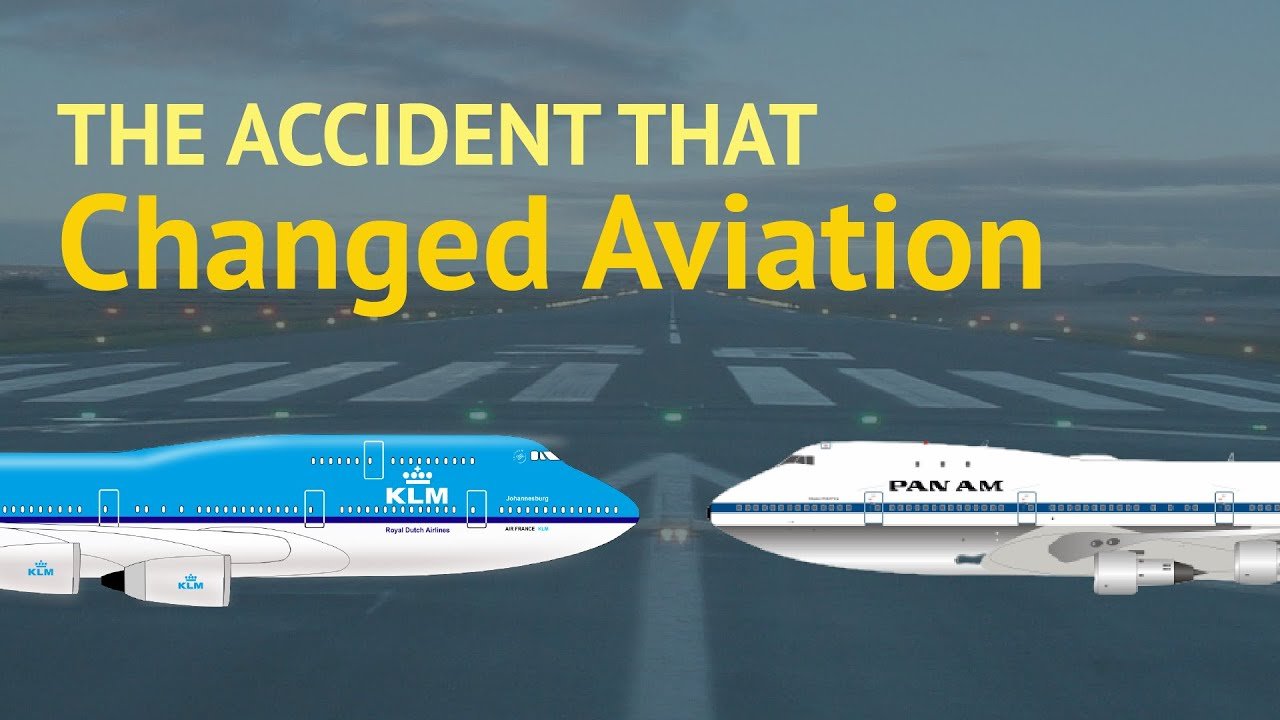
On 27 March 1977, KLM Flight 4805 and Pan Am Flight 1736, both diverted to Los Rodeos by a bomb at Las Palmas, collided in fog on the Tenerife runway. The KLM captain began his takeoff without clearance while the Pan Am 747 was still taxiing towards him, and 583 people were killed. This short explainer covers the sequence, the radio calls, the investigation's findings and the changes to phraseology and crew training.
Full written account
The collision of two Boeing 747s at Tenerife on 27 March 1977 killed 583 people and remains the deadliest accident in aviation history. This nine-minute explainer walks through the sequence of events and the lessons drawn from it.
The diversion
KLM Flight 4805 left Amsterdam for Gran Canaria with Captain Jacob van Zanten, First Officer Klaas Meurs and Flight Engineer Willem Schreuder. En route, a terrorist bomb at Gran Canaria airport, and the threat of a second, forced a diversion to Los Rodeos on Tenerife. Pan Am Flight 1736 from Los Angeles and New York, with Captain Victor Grubbs, First Officer Robert Bragg and Flight Engineer George Warns, was also diverted. The small airport filled up so quickly that aircraft were parked on the main taxiway.
Backtracking in fog
When Gran Canaria reopened, the KLM 747 was refuelling, with its passengers in the terminal, and blocked the Pan Am aircraft. Once finished, KLM was told to taxi down runway 12 and turn around to take off on runway 30, a procedure called backtracking. Pan Am was to follow and leave by taxiway C3. At 2,000 ft elevation, the airfield was prone to cloud, and as Pan Am entered the runway visibility dropped from 500 m to 100 m. The crew struggled to identify their exit.
The takeoff without clearance
As KLM lined up, the captain began to apply power; the first officer reminded him they had no clearance. The controller then gave the route clearance for after departure, but not a takeoff clearance. The first officer read it back and added "we are now at takeoff", and the captain said "let's go". The tower's "okay, stand by for takeoff, I will call you" and Pan Am's "we're still taxiing down the runway" were blocked by interference. When the tower asked Pan Am to report clear, the KLM flight engineer raised the alarm, but the captain continued.
The collision
The Pan Am crew saw the KLM jet through the fog and applied full power to turn off the runway. The KLM captain rotated early, striking his tail on the runway, and only just got airborne. His engines and landing gear struck the Pan Am fuselage. The KLM aircraft crashed about 150 m further on, slid about 300 m and caught fire. All 248 on board KLM and 335 on Pan Am were killed; 61 on the Pan Am aircraft, including the flight crew, survived.
In the fog the controller heard explosions but could not see what had happened, and the fire crews at first attended only the KLM fire, unaware a second aircraft was involved.
Findings and changes
Investigators from Spain, the Netherlands and the United States found a chain of factors: the congested airport, non-standard phrases such as "we are now at takeoff", blocked radio calls, worsening weather and a difficult exit for the Pan Am crew. The main cause was the KLM captain's decision to take off without clearance and to disregard his flight engineer's challenge. The word "takeoff" is now reserved for takeoff clearances, and crews say they are "ready for departure". The accident also shaped crew resource management: United Airlines introduced CRM training in 1981, and by the 1990s it was a global standard.
Questions this video answers
How many people died at Tenerife?
All 248 aboard the KLM aircraft and 335 on the Pan Am aircraft died; 61 on the Pan Am aircraft survived.
Why were the aircraft at Los Rodeos?
They diverted after a terrorist attack report and a warning of a possible second bomb kept Gran Canaria closed.
What was the main cause?
The KLM captain's decision to take off without a clearance and disregarding the flight engineer's challenge about the Pan Am aircraft.
What changed afterwards?
The word takeoff is only used with an explicit clearance, and CRM training was emphasized, with United Airlines first to apply it in 1981.
Explore related events
Connected by the topic: Boeing 747