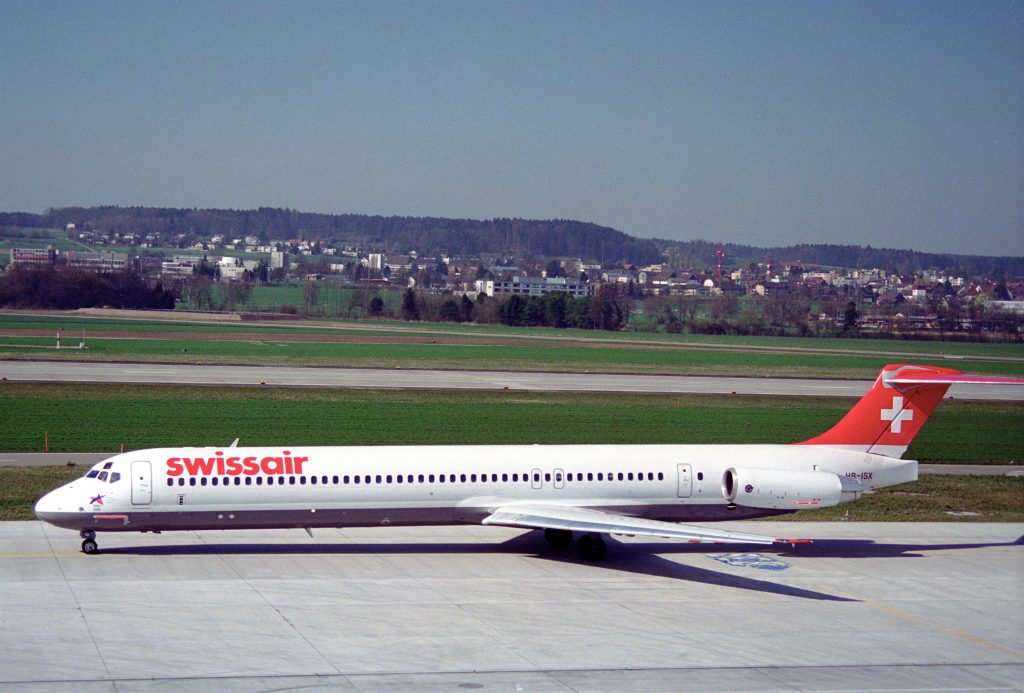
Swissair Flight 111
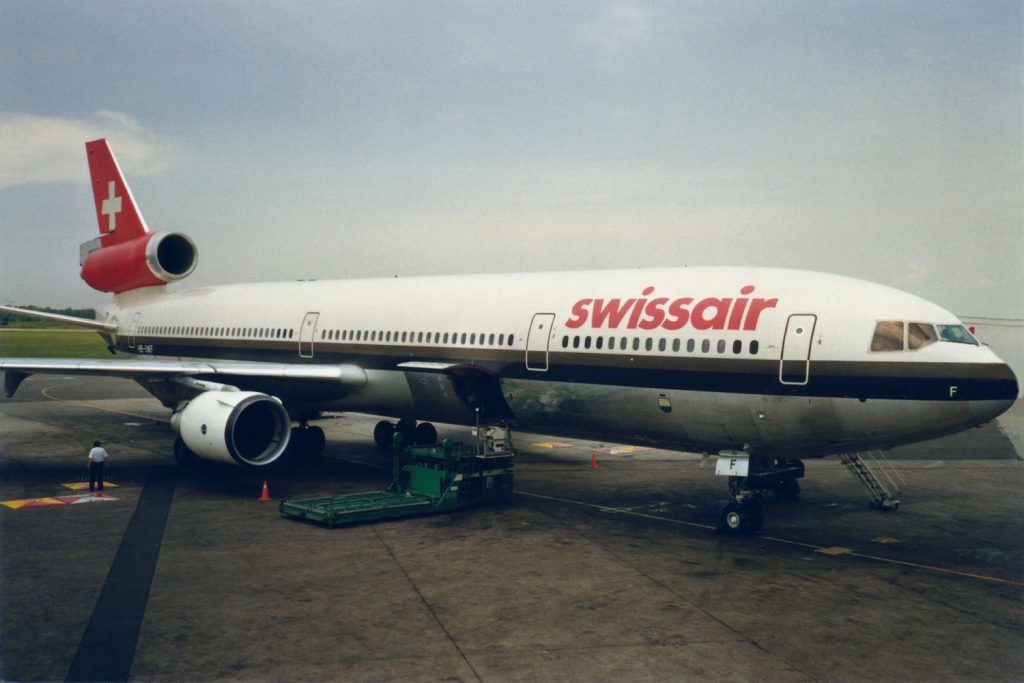
Swissair Flight 111, a McDonnell Douglas MD-11 flying from New York to Geneva on 2 September 1998, developed a fire hidden above the cockpit ceiling that spread through flammable insulation while the crew diverted towards Halifax. About 20 minutes after the pilots first noticed an unusual smell, the aircraft struck the Atlantic Ocean off Peggy's Cove, Nova Scotia, and all 229 people on board were killed.
The sequence of events
All times local
-
22:10:38
An unusual smell
Cruising at 33,000 ft about 53 minutes after leaving JFK, the pilots noticed an odour, then briefly saw smoke near an air conditioning vent. They concluded it came from the air conditioning system.
-
Watch this moment · 27:34
Pan-pan and diversion
The crew made an urgency call to Moncton Centre and asked for Boston, about 300 nm behind. Offered Halifax, 56 nm ahead, they turned for it and put on oxygen masks.
-
22:20:54
Fuel dump planned
With the aircraft above its maximum landing weight and the symptoms not worsening, the crew decided to dump fuel and were turned south over the sea towards St. Margaret's Bay.
-
Watch this moment · 36:44
Cabin bus switched off
Working through the smoke of unknown origin checklist, the captain switched off the cabin bus. Within seconds the autopilot disconnected and systems began to fail one after another as the fire reached wiring above the cockpit.
-
22:24:42
Emergency declared
Both pilots declared an emergency, said they were hand-flying and starting to dump fuel, and had to land immediately. It was their last clear transmission; the flight recorders stopped at 22:25:41.
-
22:31:18
Impact
After more than five minutes without recorded data, the MD-11 struck the water about 5 nm south-west of Peggy's Cove in a steep right bank. All 215 passengers and 14 crew were killed.
Key facts
| Aircraft | McDonnell Douglas MD-11 |
|---|---|
| Aircraft variant | MD-11, registration HB-IWF |
| Flight number | 111 |
| People who died | 229 |
| People on board | 229 |
| Were there survivors? | No |
| Phase of flight | Cruise |
Official finding · Transportation Safety Board of Canada (TSB)
a fire, most likely started by a wire arcing event above the ceiling at the rear of the cockpit, spread through flammable MPET-covered insulation blankets that certification standards had allowed, degraded the aircraft's systems and cockpit environment, and ultimately led to the loss of control.
Questions and answers
What caused the fire on Swissair Flight 111?
The TSB found the fire most likely began with an electrical arc in wiring above the cockpit ceiling. A wire from the in-flight entertainment network's power supply cable showed arc damage in that area, but the TSB could not say for certain it was the first event. The flame spread through metallised PET (MPET) film on the insulation blankets.
Why didn't the pilots know there was a fire?
There were no smoke or fire detectors in the area above the ceiling, and none were required. Early smoke reached the cockpit through an air conditioning vent, so the crew reasonably believed the source was the air conditioning system.
Could Swissair 111 have reached Halifax in time?
The TSB concluded that even with a direct diversion at the first sign of smoke, the aircraft could not have reached the runway before about 22:27, by which time the fire had already disabled key systems. Dumping fuel did not change the outcome.
How many people died?
All 229 people on board: 215 passengers, 2 pilots and 12 flight attendants.
What changed after Swissair 111?
MPET-covered insulation was removed from aircraft, flammability tests were rewritten to include electrical arcs and hot particles, aftermarket wiring installations came under stricter rules, and smoke checklists were changed to prioritise landing at the nearest suitable airport. The earlier Swissair Flight 551 shows how a smoke emergency on a short flight could end differently.
Sources: The facts and written text on this page come from the 1 video on this page, by Mentour Pilot.