Olympic Airways Flight 411
An engine failed as Olympic Airways Flight 411, a fully loaded Boeing 747 bound for New York, lifted off from Athens on 9 August 1978, and the jet barely climbed as it crossed the city at rooftop height. The crew nursed it out over the sea, dumped fuel and landed back at Athens about an hour later, and all 418 people on board survived.
The sequence of events
All times local
-
Early afternoon, 13:00approximately
A heavy jet lines up
The 747 taxied to runway 33R weighing about 350,000 kg, 99.6% of its maximum takeoff weight, on a 32 °C day. Engine 2 was already limited to about 95% thrust, and the flight engineer armed the water injection system for extra power.
-
Watch this moment · 9:02
Engine 3 fails
A loud bang came from the right inboard engine just as the nose wheel left the runway. The captain continued the takeoff and the aircraft lifted off just clear of the perimeter fence.
-
Watch this moment · 10:13
Water injection switched off
The flight engineer saw the engine 3 water-flow light go out, took it to mean the water had run out and switched off the pumps. The three remaining engines lost their boost, and the aircraft almost stopped climbing.
-
Watch this moment · 14:52
Over Pani Hill by 9 feet
The captain had the landing gear raised and held the wings level. The 747 cleared the 200 ft hill at Alimos at 209 ft, then had to descend to about 160 ft over the city to keep its speed.
-
30 seconds after the pumps went offapproximately
A little more thrust
The throttles were moved forward, though not to full go-around power. With a light headwind and flaps raised from 20 to 10 degrees, the jet began to climb and turned gently towards the sea.
-
Watch this moment · 28:39
5 minutes after takeoffapproximately
Go-around thrust at last
Over the sea, with fuel streaming from the wingtip jettison nozzles, the crew finally pushed the throttles to go-around thrust and the 747 climbed away normally.
-
An hour after takeoffapproximately
Safe landing at Athens
After roughly 45 minutes of dumping about 80 tonnes of fuel, the crew landed on three engines on runway 33R. All 400 passengers and 18 crew were unhurt.
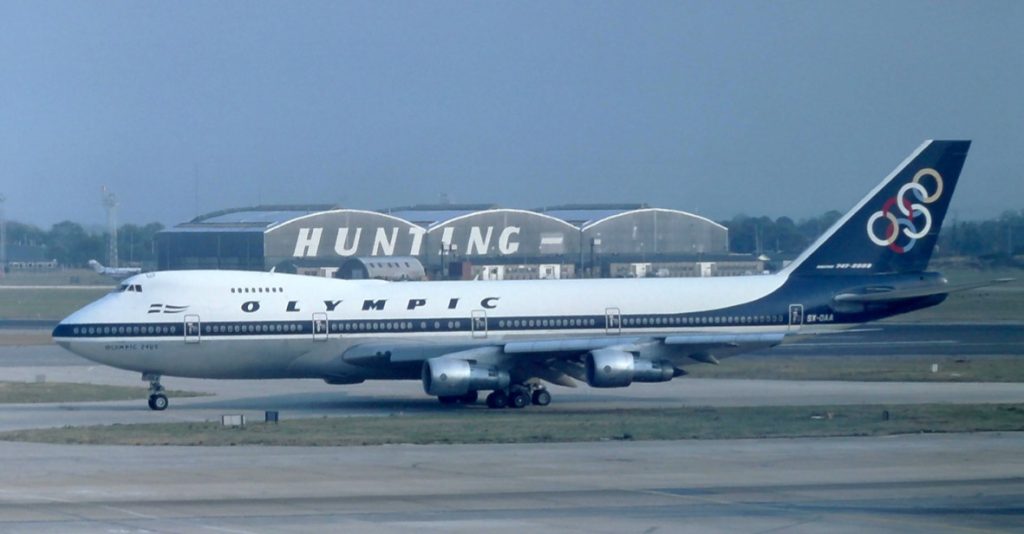
Key facts
| Aircraft | Boeing 747 |
|---|---|
| Aircraft variant | Boeing 747-284B, registration SX-OAA |
| Flight number | 411 |
| People who died | 0 |
| People on board | 418 |
| Were there survivors? | Yes |
| Phase of flight | Takeoff |
Official finding · Boeing performance analysis for the Greek Civil Aviation Authority (1978)
no airframe or engine fault caused the poor climb; switching off water injection after the engine failure, with thrust left below go-around power, removed the margin a heavy 747 needed on a hot day. No state accident report was published.
Questions and answers
Did anyone die on Olympic Airways Flight 411?
No. All 418 people on board, 400 passengers and 18 crew, survived, and no one on the ground was hurt.
Why did the Boeing 747 struggle to climb over Athens?
Engine 3 failed at rotation on an aircraft already at 99.6% of its maximum takeoff weight on a hot day. Seconds later the flight engineer switched off the water injection pumps, cutting thrust on the other three engines, and the throttles were not advanced to go-around power until about five minutes after takeoff.
Why was the water injection turned off?
The engine 3 water-flow light went out when that engine failed. The flight engineer read it as the water tanks running dry and switched off the pumps, although plenty of water was left for the three working engines.
How low did Flight 411 fly over Athens?
It cleared Pani Hill in Alimos, about 200 ft high, by 9 ft, then descended to about 160 ft above sea level over the city, low enough that it reportedly struck TV antennas on rooftops.
What happened to the pilots afterwards?
Captain Sifis Migadis and Captain Konstantinos Fikardos, flying as first officer, were praised for keeping the aircraft flying just above stall speed. The incident is still used in Boeing training material.
Sources: The facts and written text on this page come from the 1 video on this page, by Green Dot Aviation.