Air Canada Flight 143: The Pounds-for-Kilograms Fuel Error
The short version
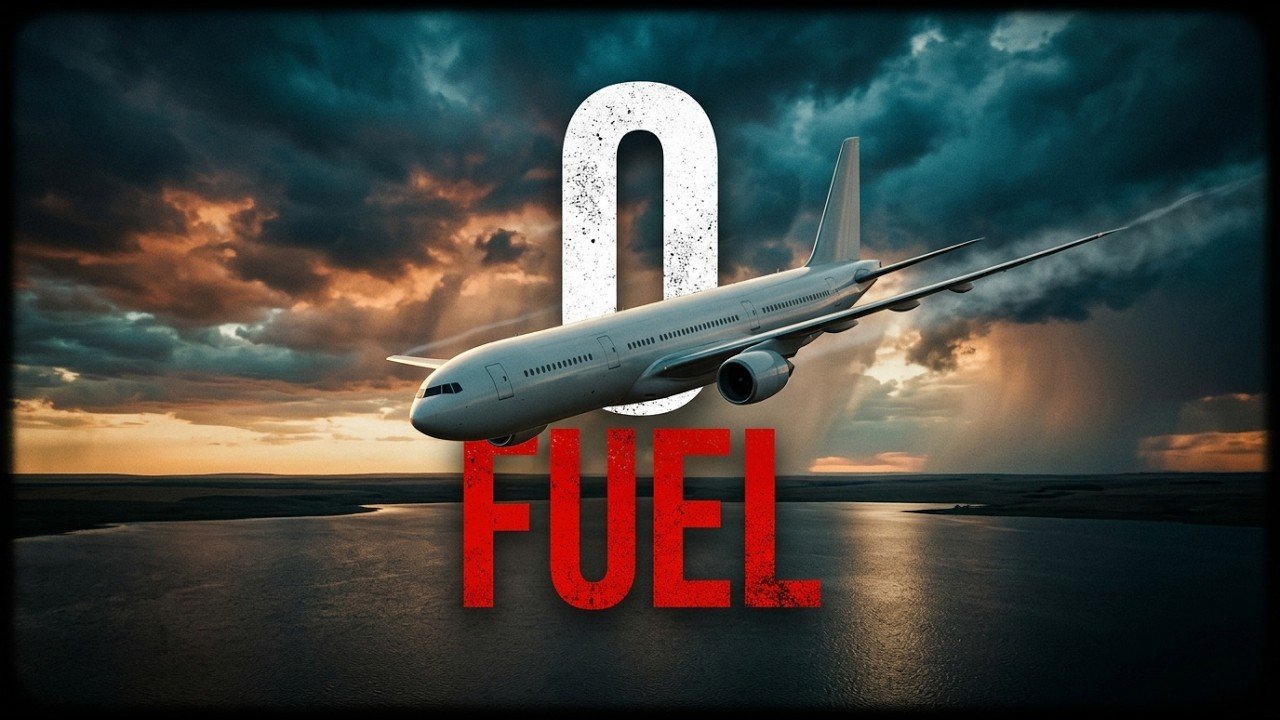
On 23 July 1983 an almost new Air Canada Boeing 767 ran out of fuel over northern Ontario after its fuel was calculated with the wrong conversion factor. The pilots glided it to a closed air force base at Gimli, Manitoba, which was in use as a racetrack. All 69 people on board survived. This video follows the paperwork that went wrong, as well as the landing.
Full written account
Air Canada Flight 143 was a Boeing 767, registration C-GAUN, flying from Montreal to Edmonton with a stop in Ottawa on 23 July 1983. It carried 61 passengers and 8 crew. Over Red Lake, Ontario, both engines stopped for lack of fuel. Captain Robert Pearson and First Officer Maurice Quintal glided the aircraft to a landing at Gimli, Manitoba, and everyone survived. This video explains how a modern airliner left the gate with about half the fuel it needed.
A new aircraft in a fleet in transition
The 767 was new to Air Canada and was flown by two pilots, without the flight engineer who had looked after the fuel on older airliners. Canada was moving to the metric system, and this was the only type in the fleet that measured its fuel in kilograms. The rest of the fleet used pounds. The Board of Inquiry later found that nobody had been clearly given the job of calculating the fuel load on the 767.
Blank fuel gauges
The 767's fuel gauges were driven by a processor with two channels. The day before, in Edmonton, all three gauges went blank, and a technician pulled the circuit breaker for one channel so the gauges worked again. In Montreal, another technician reset that breaker during a test, the gauges went blank again, and he did not pull it back out. With no spare processor in Montreal, the aircraft left with blank gauges. The minimum equipment list did not allow that. The Board found that Captain Pearson, who had the final say, left Montreal and later Ottawa contrary to it.
The 1.77 conversion
With no gauges, the fuel had to be measured by hand with a dripstick. Fuel is pumped in litres, but the 767 needed its fuel in kilograms, so the litres had to be multiplied by the fuel's density, about 0.8 kilograms per litre. The figure on the paperwork was 1.77, the number of pounds in a litre. The video works through the arithmetic. The flight needed 22,300 kg. The dripstick showed 7,682 litres already on board. Using 1.77, the crew believed they needed about 4,900 litres more, about a quarter of the roughly 20,000 litres actually needed. The same mistake was repeated in Ottawa. The aircraft left each airport with only about half the fuel the crew thought it had.
Over Red Lake
Shortly after 8 pm Central Daylight Time, at 41,000 feet, a low fuel pressure warning came on for the left fuel pump, then for the right. Pearson diverted toward Winnipeg. Within minutes both engines stopped at about 35,000 feet, and the electronic displays went blank, leaving the pilots a few standby instruments. A ram air turbine dropped into the airflow to give just enough hydraulic power to move the controls. There was no checklist for losing both engines. Quintal worked out the glide from radar distances and a backup altimeter and concluded that they would not reach Winnipeg. At 8:32 pm the crew turned for Gimli, a disused air force base where Quintal had once trained.
The sideslip and the drag strip
Part of the Gimli field had become a motorsport park, and a racing event was on that evening. The aircraft was too high and could not circle. Pearson, an experienced glider pilot, crossed the controls into a forward slip to lose height without gaining speed. The main gear dropped and locked by gravity, but the nose gear did not lock. The aircraft touched down within about 800 feet of the start of the 7,200-foot runway. Two tyres burst and the nose gear collapsed, and the friction of the nose on the runway helped stop the aircraft before it reached the people at the far end. It had been without fuel for about 17 minutes. Some passengers were hurt on the rear slides, which were too short because the tail was raised. The injuries were minor.
What the inquiry found
The Board of Inquiry, led by Justice George Lockwood, reported in April 1985. It said that calling the accident a simple metric mix-up was true but incomplete. It found errors by the crew and by maintenance in Montreal, and it placed a large part of the responsibility on Air Canada: a metric aircraft brought into a non-metric fleet, no one assigned to calculate fuel, too few spare parts for the gauge processor, and too little training. Its recommendations included standardising units across the fleet, dripsticks that read in kilograms, and independent checks of the fuel load. The aircraft was repaired and flew for about 25 more years. It made its last flight in January 2008.
Questions this video answers
Did anyone die on Air Canada 143?
No. Nobody on the airplane was killed and nobody on the ground was hit; injuries were minor.
Why did the plane run out of fuel?
The crew used 1.77, the pounds-per-liter figure, instead of about 0.8 kg per liter, so the airplane left with about half the fuel they thought it had.
How did the pilots land without engines?
Captain Robert Pearson, a glider pilot, used a forward slip to lose height, and landed at the closed Gimli airfield that First Officer Maurice Quintal knew.
What did the inquiry conclude?
It said the accident was not simple, placing responsibility on the crew, the Montreal maintenance work and, to a large part, Air Canada itself.
Explore related events
Connected by the topic: Fuel exhaustion