Helios Airways Flight 522: Inside the Ghost Plane Inquiry
The short version
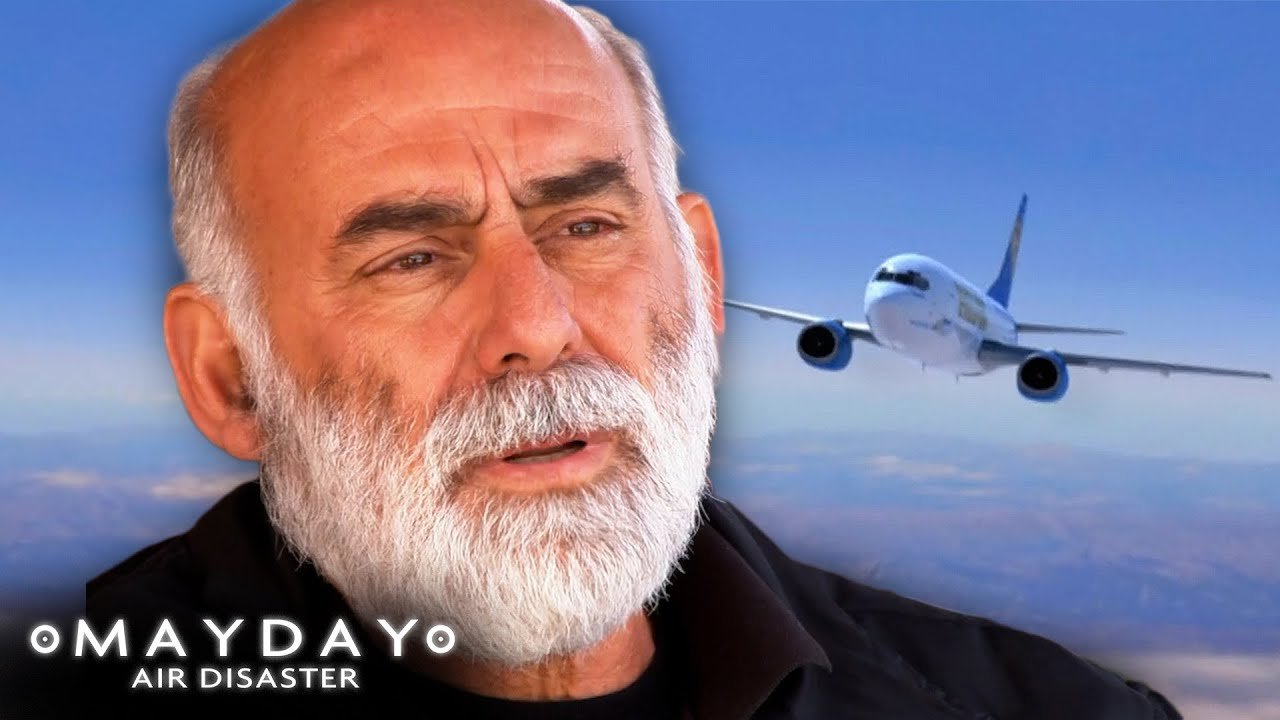
This Mayday episode follows Greek investigators as they work out why a Helios Airways 737 flew silently for almost three hours before crashing near Athens in August 2005, killing all 121 on board. A pressurisation selector left in manual after night maintenance, a misread warning horn and hypoxia explain the silence, and a reenactment flight confirms it. The programme also reconstructs how flight attendant Andreas Prodromou reached the cockpit at the very end.
Full written account
Helios Airways Flight 522, a Boeing 737 from Larnaca, circled near Athens without answering radio calls on 14 August 2005 before crashing into hills near Grammatiko, killing all 121 people on board. This Mayday episode reconstructs the flight and the Greek investigation, led by Akrivos Tsolakis of the AAIASB, using interviews with Helios staff, investigators and relatives.
A routine Sunday flight
The flight was full of holidaymakers and families heading for Athens. In the cockpit were a German contract captain, Hans-Jürgen Merten, and a Cypriot first officer, Pambos Charalambous. Andreas Prodromou, a 25-year-old flight attendant who wanted to become a Helios pilot, was on the cabin crew. The 737 took off just after 09:00.
Minutes into the climb a horn sounded. The crew took it for a takeoff configuration warning, which should only sound on the ground. They then saw a master caution and an equipment cooling light. The captain called the airline's operations centre, and a ground engineer asked whether the pressurisation panel was set to auto. The captain asked instead where the equipment cooling circuit breakers were. Then the radio went silent.
A silent jet over Athens
The aircraft levelled off and flew on to Athens, then entered a holding pattern. With no reply from the crew, the Greek air force scrambled two F-16s. One pilot saw the first officer slumped over the controls, no captain, and passengers motionless with oxygen masks hanging. Later he saw a person moving in the cockpit. The 737 turned and descended, and shortly after noon it crashed. There were no survivors. It was the worst air disaster in Greek history, and Cyprus declared three days of mourning.
Searching for answers
Autopsies showed that the people on board were alive when the aircraft crashed. Tissue samples showed that Andreas Prodromou was at the controls. When the cockpit voice recorder was found, it captured his calls for help, and ruled out a deliberate act. The flight data showed the aircraft had simply run out of fuel after nearly three hours on a 90-minute flight.
The aircraft had a history. Less than a year earlier it had lost pressure in flight, and a flight attendant on that flight described a rear service door that was not fully sealed. On the night before the accident, crew reported banging noises and ice at the same door, and engineers ran a pressurisation test, which required switching the pressurisation mode selector from auto to manual.
One switch
The pressurisation panel recovered from the wreckage had the selector in manual. After the test it had not been returned to auto, and the crew did not notice. With the outflow valve partly open, the cabin did not pressurise as the aircraft climbed.
Four months after the crash, Tsolakis flew a reenactment on an Olympic Airlines 737. With the selector in manual, the same horn sounded, the master caution appeared, and the equipment cooling warning followed, a side effect of the thin air rather than a real overheat. The reenactment also showed that a person in a cabin crew uniform in the captain's seat matched what the F-16 pilot saw, and that noises on the recorder were the cockpit door keypad.
What the programme suggests about the cabin
The passenger masks supply oxygen for about 12 minutes, designed to last until the pilots descend. Nobody descended. The programme explains that cabin crew could use portable oxygen bottles, and reconstructs how Prodromou, a scuba diver and former soldier, may have stayed conscious and reached the cockpit, possibly more than once. These parts are the programme's interpretation; the official report does not establish what happened in the cabin. At the end he called for help, but the radio was still tuned to the Larnaca frequency, and the aircraft had run out of fuel.
Questions this video answers
What caused Helios 522 to crash?
The plane ran out of fuel. Investigators traced the chain of events to a pressurization switch left on manual after maintenance, which the crew did not notice.
Who was at the controls at the end?
Flight attendant Andreas Prodromou, who held a commercial pilot's license, was identified from tissue samples.
Why did the alarms confuse the crew?
The pressurization-related alarm sounded identical to the takeoff configuration warning, and the master caution light was read as a cooling problem.
Were there survivors?
No. All 121 people on board died.
Explore related events
Connected by the topic: Fuel exhaustion