Air Canada Flight 143: Gimli Glider Landing and the Inquiry
The short version
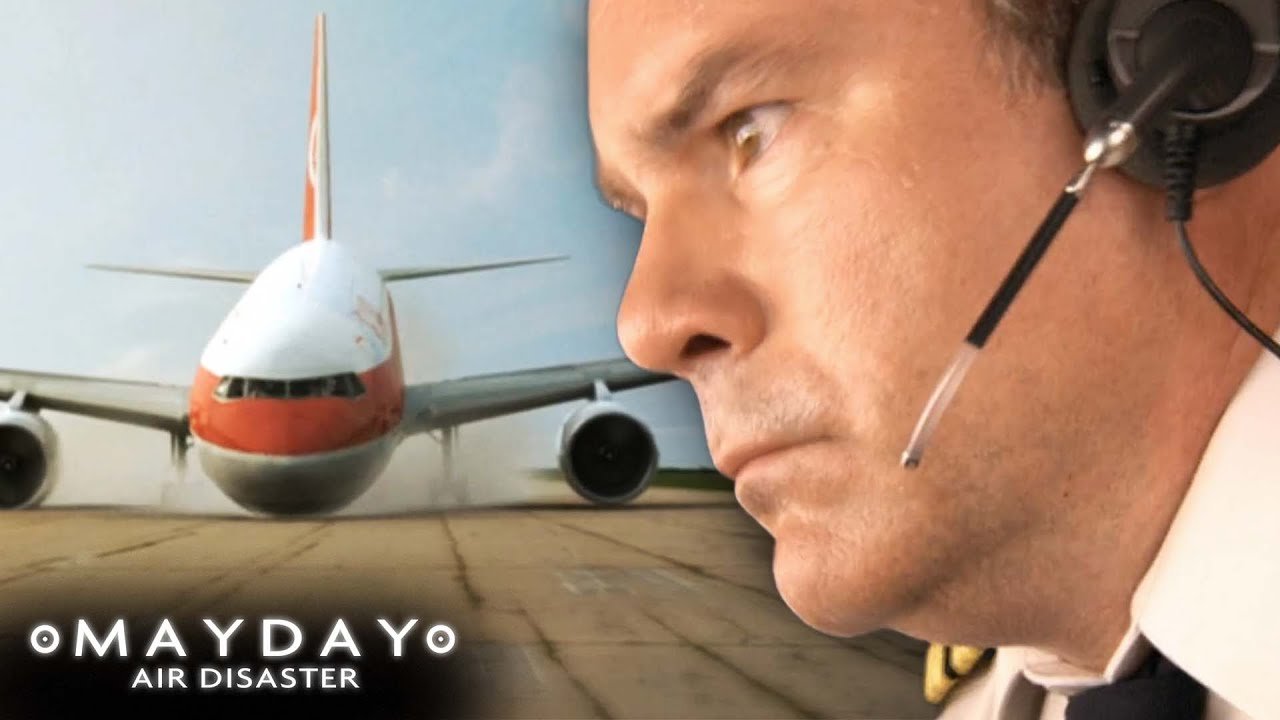
This full Mayday episode follows Air Canada Flight 143 from the first fuel pump warning to the landing at Gimli, Manitoba, on 23 July 1983, and then into the investigation. Investigators found the fuel tanks almost dry, traced the blank fuel gauges to a faulty solder joint, and found that the fuel had been calculated in pounds instead of kilograms. All 69 people on board survived.
Full written account
This is the full-length Mayday episode on Air Canada Flight 143. The first part is the same reconstruction of the flight as the shorter version: the fuel pump warnings, the loss of both engines, the controllers' search on primary radar and Captain Bob Pearson's sideslip onto the runway at Gimli. The second half follows the investigation.
The flight in brief
The Boeing 767 carried 61 passengers and 8 crew from Montreal toward Edmonton. After low fuel pressure warnings, Pearson diverted to Winnipeg. Both engines stopped, the colour displays went dark, and a ram air turbine kept the controls powered. First Officer Maurice Quintal worked out that they could not reach Winnipeg and suggested Gimli, a former air force base. Pearson sideslipped the aircraft down to the runway, which had become a drag strip. The nose gear collapsed, and the aircraft stopped 17 minutes after running out of fuel. About ten people were slightly injured in the evacuation.
Out of fuel, not leaking
Investigators from Canada's Aviation Safety Bureau, among them Bill Taylor and Diane Rochello, drained the tanks and collected less than 17 gallons. The aircraft could hold almost 24,000 gallons. Taylor also crawled into the dry bay and found no sign of a fuel leak. The aircraft had simply taken off without enough fuel.
The fuel gauge processor
Rochello took the digital fuel gauge processor to its maker, Honeywell, in Indianapolis. Testing showed a malfunction, which was traced to an inductor coil sealed in plastic. Once the casing was opened, the investigators could see that a solder joint had not been made properly. That explained the blank gauges. It did not explain the missing fuel, because the ground crew knew the gauges were out and measured the tanks by hand.
Pounds, not kilograms
The fuelling records showed the problem. The 767 was the first aircraft in Air Canada's fleet with metric fuel measurement, but the calculation used a factor that converts litres to pounds. The flight needed 22,300 kilograms of fuel and left with about 22,300 pounds, roughly half. That was also why the flight management computer showed plenty of fuel: it had been given the wrong starting figure. On older aircraft, the flight engineer worked out the fuel load. With a two-person crew, it was not clear whose job it was, and the inquiry found that neither the pilots nor the technicians had been trained in metric fuel calculations.
Outcome
The Board of Inquiry recommended that Air Canada review crew and ground-staff training in metric fuel conversions and keep more spare parts, such as fuel gauge processors. The episode notes that the collapsed nose gear may have prevented a worse outcome, because it shortened the landing run before the people at the strip. In the episode, a Vancouver simulator trial is said to have ended in a crash for every crew who tried the same scenario. That claim comes from an interviewee and was not part of the inquiry's findings. Quintal became a captain in 1989, and Pearson flew for Air Canada for another ten years. The aircraft was repaired and returned to service with the nickname "the Gimli Glider".
Questions this video answers
Why did Air Canada Flight 143 run out of fuel?
Fuel calculations confused pounds with kilograms. The aircraft required 22,300 kilograms but departed with 22,300 pounds, while its fuel gauges were inoperative.
Did everyone survive the Gimli Glider landing?
Yes. All 69 people aboard survived. Ten people suffered slight injuries during evacuation, mostly on the steep rear slides.
Why couldn't the crew reach Winnipeg?
Using altitude and radar-distance information, Maurice Quintal calculated that the aircraft would reach the ground 15 miles short of the runway.
How did Pearson lose altitude without gaining too much speed?
He used a sideslip, crossing the rudder and aileron controls to push the aircraft sideways into the airflow and increase drag.
What kept the flight controls working after both engines stopped?
The ram air turbine deployed into the airflow and drove a small hydraulic pump that supplied basic systems.
Explore related events
Connected by the topic: Fuel exhaustion