Olympic Airways Flight 411: How a 747 Skimmed Athens Rooftops
The short version
An engine failed as a fully loaded Olympic Airways 747 left Athens for New York in August 1978, and the flight engineer then switched off the water injection that boosted the other three engines. The jet crossed the city just above the rooftops before a headwind, a little more thrust and careful flying let it climb out over the sea. After dumping about 80 tonnes of fuel, the crew landed back at Athens with all 418 people safe.
Full written account
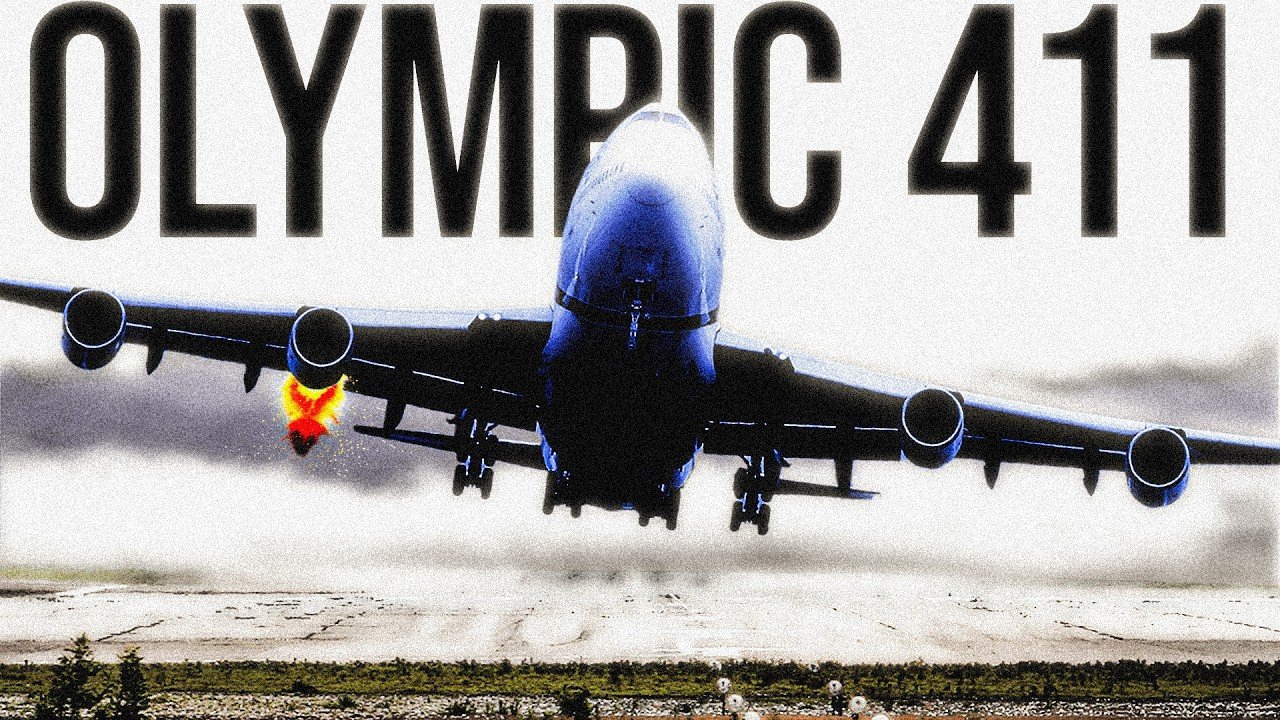
On 9 August 1978, Olympic Airways Flight 411, a Boeing 747 carrying 418 people from Athens to New York, lost an engine at the moment it left the runway. For about five minutes the aircraft barely climbed, crossing southern Athens at rooftop height. It came back to land an hour later with everyone unhurt. The video reconstructs how close it came and why.
A heavy jumbo on a hot day
The aircraft, Olympic Zeus, was five years old and one of only two 747s in the Olympic fleet. On a 32 °C afternoon it weighed about 350,000 kg, 99.6% of its maximum allowed takeoff weight, with over 120 tonnes of fuel for the 11-hour flight. Engine 2 had a defect that limited it to about 95% of normal thrust.
Runway 33R pointed towards the mountains north-west of the city, so departures had to turn early towards the sea. To get the extra performance it needed, the 747 used water injection: about 2,000 litres of water sprayed into the engines, adding more than 3% thrust, over 6,000 lb across the four engines.
The cockpit crew were experienced. Captain Sifis Migadis, 55, was a 747 instructor. Captain Konstantinos Fikardos was flying as first officer, with a flight engineer behind them and a relief crew on board for the long flight.
Engine failure and a misread light
Just as the nose wheel left the ground, engine 3 failed with a loud bang. The captain continued the takeoff, and the jet lifted off just clear of the perimeter fence. A 747 can climb on three engines, even at this weight.
Seconds later, the flight engineer noticed that the water-flow light for engine 3 had gone out. Normally that meant the water had run out, so he switched off the pumps. In fact the tanks still held plenty of water, and the three working engines were using it. Without the boost, and with engine 2 already limited, the aircraft lost almost all of its climb.
Over Pani Hill by 9 feet
To cut drag, the captain called for the landing gear to come up, accepting the brief extra drag while the gear doors opened. He kept the wings level, because any bank would have taken lift away from the climb. The 747 crossed Pani Hill in Alimos, about 200 ft high, at 209 ft.
With speed close to the stall, the only way to gain it was to descend. The jet dropped to about 160 ft above sea level over the city at about 165 knots, low enough to clip TV antennas. Ground effect, the reduced drag of a wing flying close to the surface, helped keep it in the air. Many passengers took photos, unaware of the danger. The captain looked ahead to the slopes of Mount Aigaleo as the least harmful place to come down if he had to.
Climbing away
About 30 seconds after the pumps went off, the throttles were moved forward, though not to full go-around thrust. A light headwind to the west added airspeed. The captain had the flaps raised from 20 to 10 degrees, and at about 170 knots the jet began to climb: 200 ft, then 300 ft, then 500 ft as it turned in a wide, shallow arc towards the sea.
Over the water the flight engineer began dumping fuel at about 36 kg per second, because the aircraft was nearly 100 tonnes above its 256-tonne maximum landing weight. About five minutes after takeoff, the crew finally pushed the throttles to go-around thrust and the 747 climbed normally to 1,500 ft.
Back to Athens
After about 45 minutes and roughly 80 tonnes of fuel dumped, the crew flew an approach to runway 33R on three engines and landed about an hour after takeoff. All 400 passengers and 18 crew were safe.
What Boeing's analysis found
Boeing reconstructed the flight from the flight data recorder. The aircraft behaved as expected for the thrust it had: the engine failure and the loss of water injection removed its margin, and for about 30 seconds the three remaining engines stayed well below their available go-around thrust. It was several minutes before enough thrust was set for a normal climb. Early gear retraction and precise flying just above the stall saved the aircraft and the people below it.
Water injection has since disappeared from airliners, because modern engines on the 747-8 and A380 are far more powerful, and the flight engineer's job has largely passed to automation.
Questions this video answers
Did anyone die on Olympic Airways Flight 411?
No. All 418 passengers and crew returned safely to Athens.
Why did Flight 411 struggle to climb?
Engine three failed during takeoff, the flight engineer inadvertently disabled water injection, and the remaining engines were not promptly advanced to their available go-around thrust. Engine two also had an existing thrust limitation.
Why did the flight engineer turn off water injection?
After the failed engine's water-flow indicator light went out, he believed the water supply had run dry. Water was still available to the remaining engines.
How low did the aircraft fly over Athens?
It descended to about 160 feet above sea level, passing just meters above rooftops and clipping TV antennas.
How much fuel did the crew dump before landing?
The crew dumped about 80 tons during approximately 45 minutes of flying before returning to Athens.
What did Boeing's analysis establish?
Boeing found that the recorded performance was consistent with the engine failure, loss of water injection and delayed use of sufficient thrust—not a departure from the aircraft's expected behavior.
Explore related events
Connected by the topic: Boeing 747