Swissair Flight 111: How a Hidden Fire Brought Down an MD-11
The short version
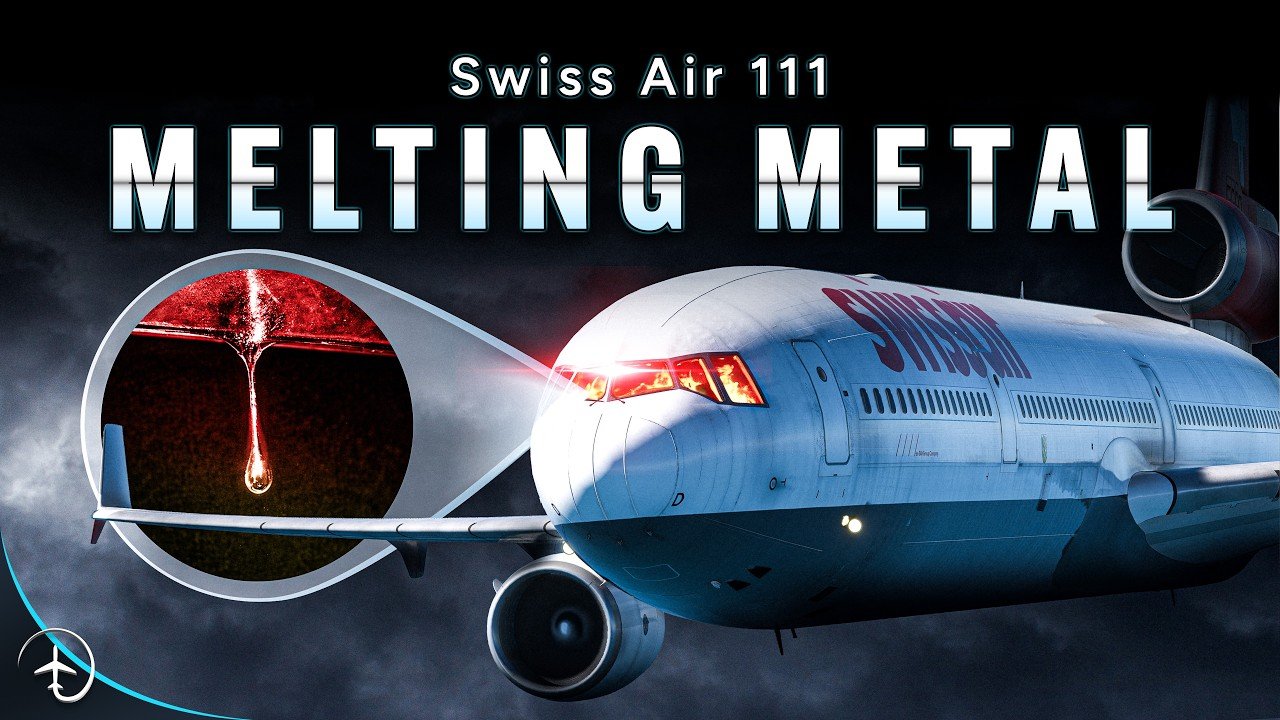
A wiring arc above the cockpit of Swissair Flight 111 set fire to flammable insulation as the MD-11 crossed Nova Scotia on its way from New York to Geneva in September 1998. The crew thought they had an air conditioning problem and diverted towards Halifax, but the fire spread unseen until systems failed and the aircraft crashed into the sea, killing all 229 people on board. The video explains the entertainment system wiring, the insulation and why the TSB found that landing sooner would not have saved the aircraft.
Full written account
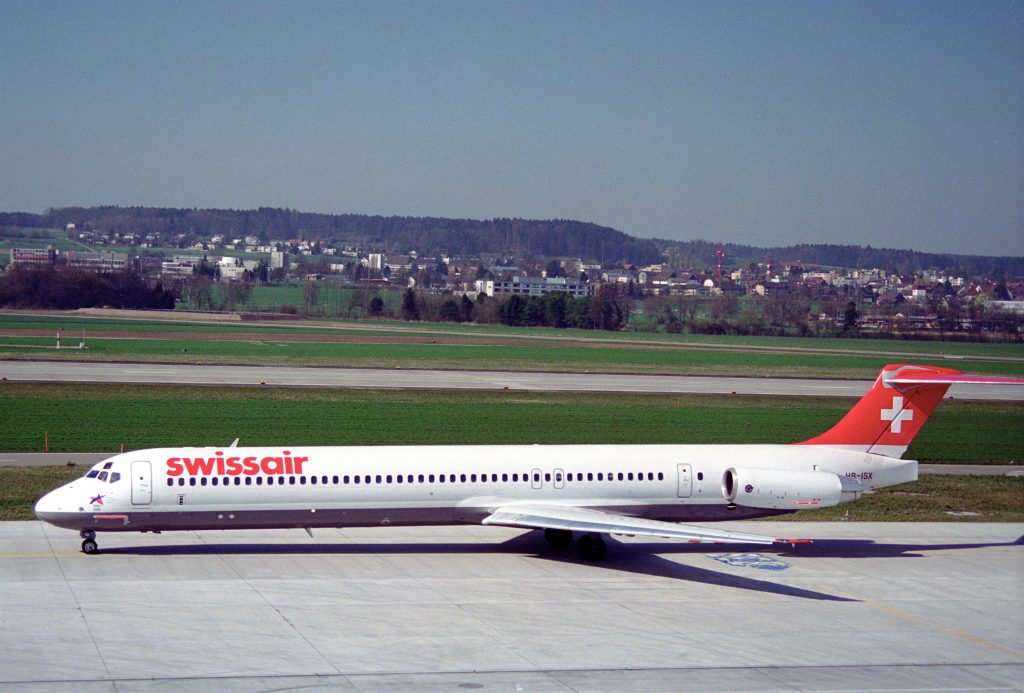
On 2 September 1998, Swissair Flight 111, an MD-11 with 229 people on board, crashed into the Atlantic Ocean off Peggy's Cove, Nova Scotia, about 20 minutes after the pilots noticed an unusual smell. A fire had been spreading unseen above the cockpit ceiling. The video, presented by airline captain Petter Hörnfeldt, explains how it started, why the crew could not see it and what changed afterwards.
A struggling airline and a power-hungry entertainment system
Swissair, once nicknamed "the flying bank", was losing money by the mid-1990s. To raise revenue it fitted some aircraft with an early interactive in-flight entertainment system that offered films, games and gambling. Each business-class seat effectively needed its own PC, drawing far more power than the MD-11's designers had planned for cabin systems.
The system was too power-hungry for the MD-11's cabin buses, so it was connected to a main AC bus meant for heavy loads such as hydraulic pumps, through a single heavy feeder cable. A short circuit could therefore release much more energy than the thin downstream wires and slow-acting circuit breakers were designed for. The TSB found the wiring layout varied from aircraft to aircraft because the installation had been rushed and poorly documented, and that approval had been delegated through a chain of contractors without anyone reviewing the whole design.
Insulation that passed its tests
The fuselage was lined with fibreglass blankets covered in a metallised film called MPET. It had passed the Bunsen burner tests of the day because it was slow to ignite, but once alight it spread flame, and the tests did not consider electrical arcs, hot particles or airflow. Fires in MPET-covered insulation had already occurred on three other MD-11s, all on the ground. Replacing it was optional, and most airlines, including Swissair, had not.
The flight
The aircraft, HB-IWF, left JFK at 20:18 New York time with 215 passengers and 14 crew. The captain, 49, had 10,800 hours; the first officer, 36, was flying, with 4,800 hours. Both had served in the Swiss Air Force.
At 22:10:38 local time, cruising at 33,000 ft, the first officer noticed a smell. A thin haze came from a vent on the rear cockpit wall. With no detectors in the space above the ceiling, the crew had no warning of a fire, and the vent suggested an air conditioning fault. A flight attendant confirmed the smell in the cockpit but not in the cabin. At 22:14:15 the crew declared a pan-pan and asked for Boston, then accepted Halifax, 56 nm ahead, and put on their oxygen masks.
Fuel dump and the cabin bus switch
Descending towards Halifax, the aircraft was still at about 21,000 ft only 30 nm from the runway and above its maximum landing weight. With symptoms steady, the crew decided to dump fuel and were turned south over St. Margaret's Bay. Meanwhile the captain moved from the air conditioning smoke checklist to the smoke of unknown origin checklist, which began by switching off the cabin bus.
When he did, the cabin recirculation fans stopped. The video explains that the airflow above the cockpit then reversed and pushed the fire forward towards the circuit breaker panels. About 24 seconds later, autopilot 2 disconnected. At 22:24:42 both pilots declared an emergency, said they were hand-flying and had to land immediately. It was their last clear transmission.
Within about a minute, yaw damper channels, a flight control computer channel and the left emergency AC bus failed. The captain's displays went dark and the transponder stopped reporting altitude. The cockpit voice recorder captured the ceiling burning through. Both recorders stopped at 22:25:41.
The final minutes
The aircraft flew on for more than five minutes. Seat rail evidence suggested the captain had left his seat. Engine 2 was shut down, probably after fire damage triggered its fire warning. At 22:31:18 the MD-11 struck the water at about 300 knots in a steep right bank, nose down about 20 degrees. Investigators considered incapacitation, disorientation, control degradation and an attempted ditching, but could not establish which applied.
The aircraft broke into millions of pieces. The TSB recovered about 98% of its structure from the seabed and reconstructed the forward fuselage. A bomb was ruled out.
Could landing sooner have saved it?
The TSB calculated that even with a direct diversion from the first sign of smoke, the earliest the aircraft could have reached the runway was about 22:27. By then the fire had already destroyed key systems, so the decision to dump fuel probably made no difference.
What changed
MPET insulation was removed from service, and flammability tests were rewritten to reflect electrical arcs, hot particles and airflow. Rules for wiring and aftermarket installations were tightened. Smoke checklists now stress diverting and landing at the nearest suitable airport rather than diagnosing the problem at length. Swissair itself collapsed a few years later.
For a Swissair smoke emergency that ended safely five years earlier, see Swissair Flight 551.
Questions this video answers
What caused the fire on Swissair 111?
A short circuit or arc near wiring of the aftermarket in-flight entertainment system ignited MPET-covered insulation above the cockpit.
Could the crew have landed in time?
The TSB concluded that even heading straight to the airport, the earliest arrival at the runway was 22:27, by which time the fire had already disabled key systems, so the fuel dump decision probably made no difference.
Were there survivors?
No. All 229 people on board died.
Explore related events
Connected by the topic: Fire or smoke