Helios Airways 522: The Switch, the Horn and Andreas Prodromou
The short version
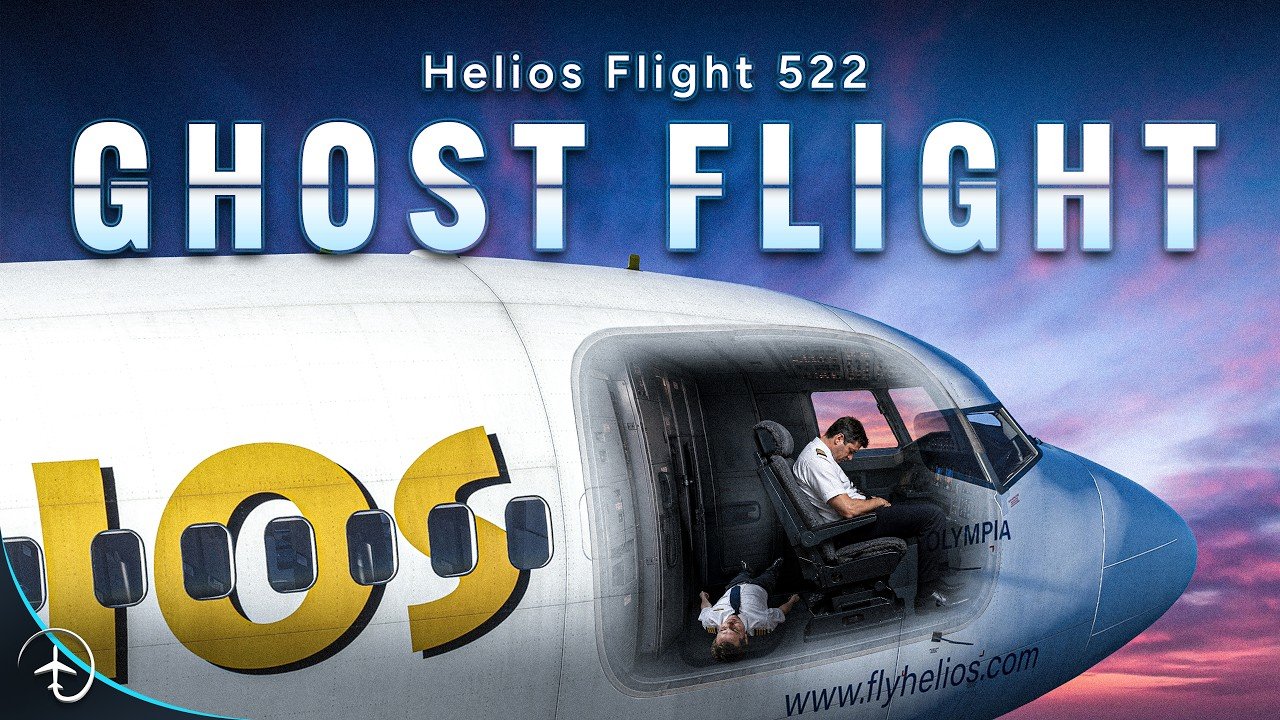
Airline captain Petter Hörnfeldt traces Helios Flight 522 from the airline's audit failures and the 737's history of pressurisation faults to the overnight test that left the selector in manual. He explains why the cabin altitude horn was mistaken for a takeoff warning, how the captain and the ground engineer talked past each other, and how the aircraft flew on autopilot until its fuel ran out. The video ends with flight attendant Andreas Prodromou's attempt to fly the 737 and the changes that followed.
Full written account
Helios Airways Flight 522 crashed near Grammatiko, north of Athens, on 14 August 2005 after flying for almost three hours with its crew incapacitated by hypoxia. All 121 people on board were killed. In this long analysis, airline captain Petter Hörnfeldt sets out each safety barrier that failed, from the airline's oversight to the design of a warning horn.
An airline under scrutiny
Helios, founded in the late 1990s, was Cyprus's first private airline, with four aircraft. The video describes how UK Civil Aviation Authority audits in 2003, 2004 and 2005 found outdated manuals, no contract with Boeing for documentation updates and weak quality control, and how understaffed Cypriot authorities rarely followed up.
The accident aircraft, 5B-DBY, a 737-300 built in 1998, had repeated pressurisation and equipment cooling write-ups. In December 2004 it lost pressure in flight and the masks dropped. Investigators later found the outflow valve had been compensating for cabin leaks on its last 74 flights.
The overnight test
On the night of 13 August, crew reported banging and ice near the rear service door, and the captain wrote that the door needed a full inspection. To look for a leak, engineers pressurised the cabin on the ground, which meant switching the pressurisation mode selector to manual. They found nothing. The video notes the test did not exactly follow the maintenance manual. The engineer later said he returned the selector to auto, but the evidence showed it was left in manual. There was no formal handover to the morning crew.
Three chances missed
The captain, 59, had 16,900 hours; the first officer, 51, had about 7,500. The preflight checklist challenge "air conditioning and pressurisation" was often answered by checking the altitude settings rather than the selector, and the green manual light did not suggest a problem. A Boeing update that would have required checking the selector explicitly had not been applied. The after-takeoff check of cabin pressure also failed to catch it. The cockpit voice recorder held only the last 30 minutes, so how these checks were missed is unknown.
One horn, two meanings
As the cabin passed 10,000 ft, the horn sounded. On the 737 the same horn meant a takeoff configuration problem on the ground and excessive cabin altitude in the air. Pilots heard the takeoff warning every day in preflight tests but the cabin altitude warning rarely, outside the simulator. The crew treated it as a configuration fault, briefly pulled the thrust back, then let the climb continue. The video recalls earlier near-misses, including a 737 departing Ireland in 2002, and notes that Boeing's training manual warning about the identical sounds was due to take effect in October 2005.
Talking past each other
Climbing through about 16,000 ft, the equipment cooling OFF lights came on with a master caution. The captain called Helios operations and reached the engineer who had done the overnight test. He said "both my equipment cooling lights are off", meaning the warning lights were lit, and the engineer was confused. The engineer asked whether the pressurisation was set to auto but got no clear answer. When the passenger masks dropped, the master caution was already lit and had not been reset, so the new warning was probably missed. The captain's last words to the ground asked where the equipment cooling circuit breakers were.
A ghost flight
With both pilots unconscious, the autopilot climbed to 34,000 ft and flew the programmed route to Athens, past its descent point and into the holding pattern over KEA. The passenger masks ran out after about 12 to 15 minutes. F-16s intercepted during the sixth hold and saw the captain's seat empty and the first officer slumped forward.
Andreas Prodromou
At 11:48, after a series of door chimes, the cockpit door opened. The F-16 pilot reported a man without a pilot's uniform, with a portable oxygen bottle, sitting in the captain's seat: flight attendant Andreas Prodromou, who held a commercial pilot licence. The video suggests he may have spent time looking for the door code or trying to help colleagues, including his girlfriend in the cabin crew.
Less than a minute later the left engine ran out of fuel, the autopilot disconnected and the 737 began to descend. Investigators took its fairly steady track as evidence he was flying it. The recorder captured his Mayday calls, which were never transmitted. The right engine stopped at about 7,000 ft. He responded to the F-16 pilot's signal only once, pointing downward. The aircraft struck the hillside at Grammatiko at 12:03.
What changed
Boeing made returning the selector to auto an explicit step after pressurisation tests, checklists and training put immediate oxygen first for any cabin altitude warning in flight, and the FAA required separate lights to show which warning the horn meant. Helios Airways stopped flying in 2006.
Questions this video answers
What caused Helios 522 to lose cabin pressure?
The pressurization mode selector was left in manual after a maintenance pressurization test, and the pre-flight checks missed it, so the cabin never pressurized.
Why did the pilots not react to the warning?
The cabin altitude warning horn is the same sound as the takeoff configuration warning on the 737, and the crew treated it as a takeoff configuration problem instead of donning oxygen masks.
Who was in the cockpit at the end?
Flight attendant Andreas Prodromou, 24, entered the cockpit with a portable oxygen bottle and took the controls after the left engine flamed out.
Were there survivors?
No. All 121 people on board died when the aircraft hit Grammatico Hill, 32 km north of Athens.
What changed afterward?
Boeing updated the maintenance manual to require returning the selector to auto, procedures were revised to stress oxygen mask use, and the FAA required separate warning lights for the two alerts.
Explore related events
Connected by the topic: Boeing 737 Classic