Air Transat Flight 236: How a Fuel Leak Stopped Both Engines
The short version
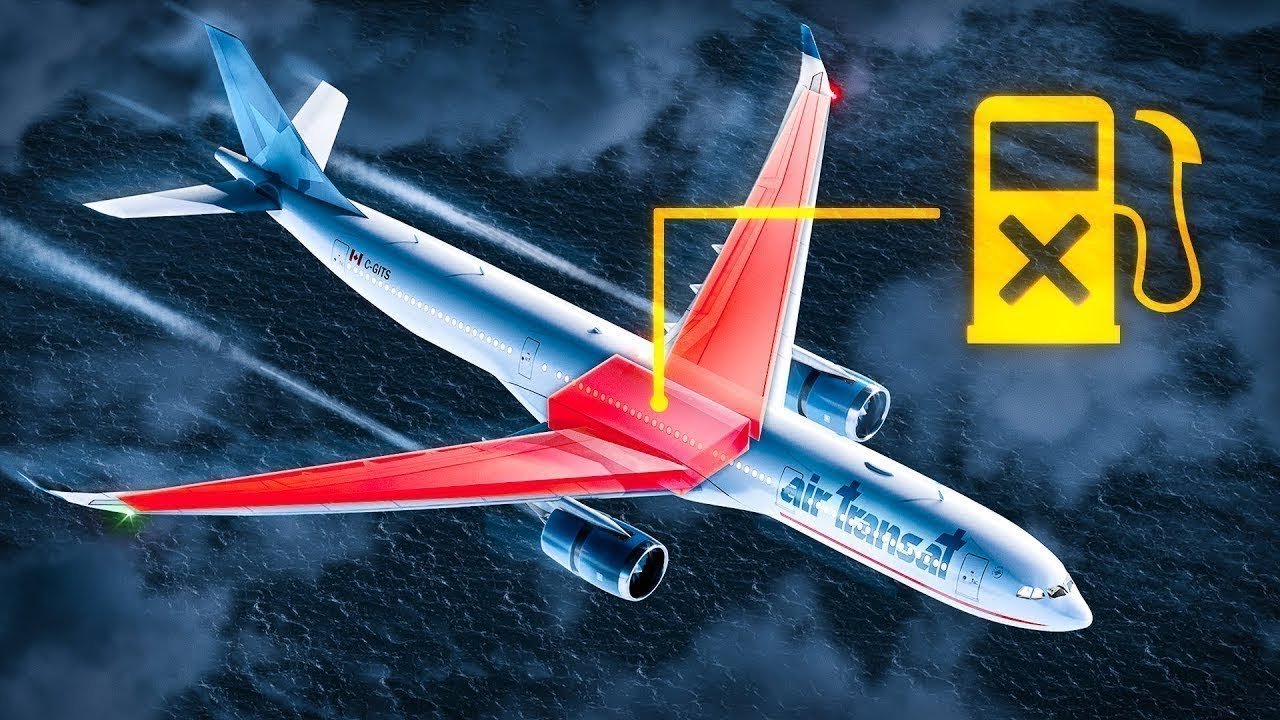
On 24 August 2001 Air Transat Flight 236, an Airbus A330 flying from Toronto to Lisbon, lost both engines over the Atlantic after a fuel leak caused by an improper engine installation. The crew glided to Lajes Airport on Terceira and landed hard. All 293 passengers and 13 crew survived. The video explains the fuel system and the crew's decisions using the final report.
Full written account
This video explains Air Transat Flight 236 using the final report. It spends most of its time on two questions: how an Airbus A330 could pour its fuel overboard without the crew recognising a leak, and how they got the aircraft onto a runway with no engines.
The aircraft and the engine change
The A330 was built in 1999 and carried 293 passengers and 13 crew, with about 46.9 tonnes of fuel, 5.5 tonnes more than the legal minimum. Captain Robert Piché was 48, and First Officer Dirk de Jager was 28. Days before the flight, metal chips in an oil filter led mechanics to replace the right engine with a loaned Rolls-Royce unit in an older configuration. The old engine's hydraulic pump would not fit, because it clashed with the new engine's fuel pump inlet tube. The lead technician could not access the service bulletins and followed engineering advice to reuse a tube from the old engine. The engine passed its ground run.
A leak the engine kept running through
Partway across the ocean, the right engine showed high oil pressure, low oil temperature and falling oil quantity. In flight, the hydraulic line had been rubbing against the fuel line, and the fuel line had split. The final report estimated the loss at 12 to 15 tonnes an hour, compared with normal consumption of about 2.6 tonnes per engine. The engine kept running because the A330's fuel system kept feeding it. The trim tank in the tail also moved its fuel forward early.
The crossfeed decision
A fuel imbalance advisory appeared. The crew relied on memory instead of the quick reference handbook, opened the crossfeed and switched off the right wing pumps. That fed fuel from the left tanks to the leaking right side. The checklist's first line would have told them not to continue if a leak was suspected. Within about ten minutes, the fuel on board fell below what was needed to reach Lisbon, and they diverted to Lajes.
Framing the problem as a computer fault
A cabin crew member checked the wings with a torch and saw nothing. With no other alerts, the pilots concluded the readings were a computer fault and decided against the fuel leak procedure, partly to avoid descending. The report found that if they had followed any of the fuel leak procedures after diverting, they would have landed with at least 3.8 tonnes of fuel. The video describes this as framing bias: once the crew believed it was a computer problem, they noticed only the evidence that fitted.
Both engines out
The right engine flamed out at 39,000 feet about 150 miles from the airport, and the first officer declared a Mayday. Thirteen minutes later the left engine stopped, about 120 km from Lajes. A ram air turbine powered the essential systems. The captain held speed above 140 knots to keep the turbine working and below 200 knots for the gravity gear extension. He arrived far too high, at 13,000 feet about 8 miles out, flew a 360-degree turn to lose height, and landed at about 200 knots with no flaps. Eight of the 12 tyres burst, the anti-skid did not work properly, and there were fires in the left main wheels. All passengers were out in about 90 seconds.
What the report concluded
The final report identified the improper installation of the spare engine as the root cause, together with the crew's lack of training for fuel leaks that appear as an imbalance and their fixed assumption that the readings were wrong. It praised their handling after the engines failed. Airbus added a fuel-loss warning, training changed, and the pilots received the Air Line Pilots Association's Superior Airmanship Award.
Questions this video answers
What caused the fuel leak?
A hydraulic line and a fuel line were placed too close together when the engine was replaced, and they wore against each other until the fuel line ruptured.
Did anyone die?
No. All 293 passengers and 13 crew survived.
How did the crew land?
They glided to Lajes Airport, performed a 360-degree turn to lose altitude, and landed on Runway 33.
What changed afterward?
Airbus added a warning in its flight management computers for significant fuel loss, and training now stresses fuel leak management and non-normal checklists.
Explore related events
Connected by the topic: Airbus A330