Air Niugini Flight 73
On 28 September 2018 an Air Niugini Boeing 737-800 struck the water of Chuuk Lagoon about 460 metres short of the runway, after the crew continued an approach into heavy rain without seeing the runway. One of the 47 people on board died, and local boat crews and US Navy divers helped rescue the other 46.
The sequence of events
All times local
-
Watch the video
Just after 09:00 (Pohnpei time)
Departure from Pohnpei
Flight PX073 left Pohnpei for Chuuk, with an onward service to Port Moresby, carrying 35 passengers and 12 crew. The flight was only about 380 nautical miles.
-
Watch the video
09:20approximately
Established on the RNAV approach
The crew joined the GPS approach to runway 04 at Chuuk, which has no control tower and no ILS. The weather radar showed a storm cell between the aircraft and the airport, and the approach continued.
-
Watch the video
09:23approximately
Into heavy rain
At about 677 feet the captain disconnected the autopilot to correct a slightly high path. Seconds later the aircraft entered intense rain and the runway disappeared from view.
-
Watch the video
09:23–09:24approximately
Below minimums, still descending
The aircraft passed the 420-foot minimum descent altitude descending at about 1,500 feet per minute, with neither pilot seeing the runway. The crew heard 13 EGPWS alerts (glideslope and sink rate) and did not go around.
-
Watch the video
09:24 local time
Impact in the lagoon
The 737 struck the water about 1,500 feet (460 m) short of the runway 04 threshold, skipped across the surface and came to rest turned around, with the rear cabin flooding.
-
Watch the video
Minutes later
Rescue by boat
US Navy divers working nearby and local boat crews reached the aircraft within minutes. 46 of the 47 people on board were rescued. One passenger, seated in 23A, died.
Key facts
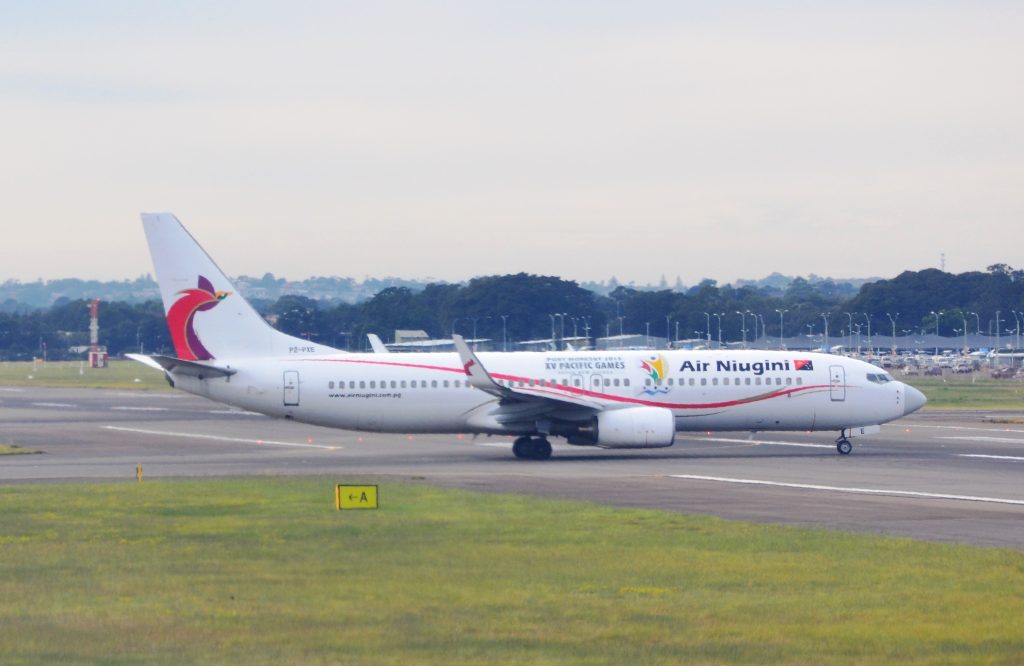
| Aircraft | Boeing 737-800 |
|---|---|
| Aircraft variant | Boeing 737-8BK, P2-PXE |
| Flight number | 73 |
| People who died | 1 |
| People on board | 47 |
| Were there survivors? | Yes |
| Phase of flight | Approach |
Official finding · Accident Investigation Commission of Papua New Guinea (AIC 18-1004), July 2019
The crew did not follow Air Niugini's procedures, continued an unstable approach in rain below the minimum descent altitude, and disregarded 13 EGPWS alerts while their attention was fixated on landing, and the captain did not fly the missed approach.
What changed afterwards
Air Niugini updated simulator training to include sudden loss of visual references and improved training on EGPWS alerts. The AIC also suggested a harder "pull up" warning. The NTSB disagreed, saying a crew that ignored 16 alerts in 19 seconds would likely have ignored another.
Questions and answers
What happened to Air Niugini Flight 73?
On final approach to Chuuk, the Boeing 737-800 flew into heavy rain, lost sight of the runway and kept descending. It hit the lagoon about 460 metres short of runway 04 and came to rest in shallow water.
How many people died?
One passenger died. The other 46 people on board survived, rescued by local boats and US Navy divers. The passenger who died was seated in 23A, next to where the fuselage broke, and passengers told investigators they had seen him standing during the approach.
Why didn't the crew go around?
The investigation found that the pilots lost situational awareness, with their attention fixated on completing the landing. The first officer, as monitoring pilot, did not challenge the captain. The airline's training had not included practical exercises for the monitoring pilot during an unstable approach below 1,000 feet.
How was the flight filmed?
A maintenance engineer from the aircraft's lessor was riding in the cockpit jump seat and filmed the approach on his phone. Investigators matched the video, frame by frame, with the flight data and cockpit voice recordings.
What changed afterwards?
Air Niugini updated simulator training to include sudden loss of visual references and improved training on EGPWS alerts. The AIC also suggested a harder "pull up" warning. The NTSB disagreed, saying a crew that ignored 16 alerts in 19 seconds would likely have ignored another.
Sources: The facts and written text on this page come from the 1 video on this page, by Mentour Pilot.