American Airlines Flight 587: The ATC Audio and the Tail Failure
The short version
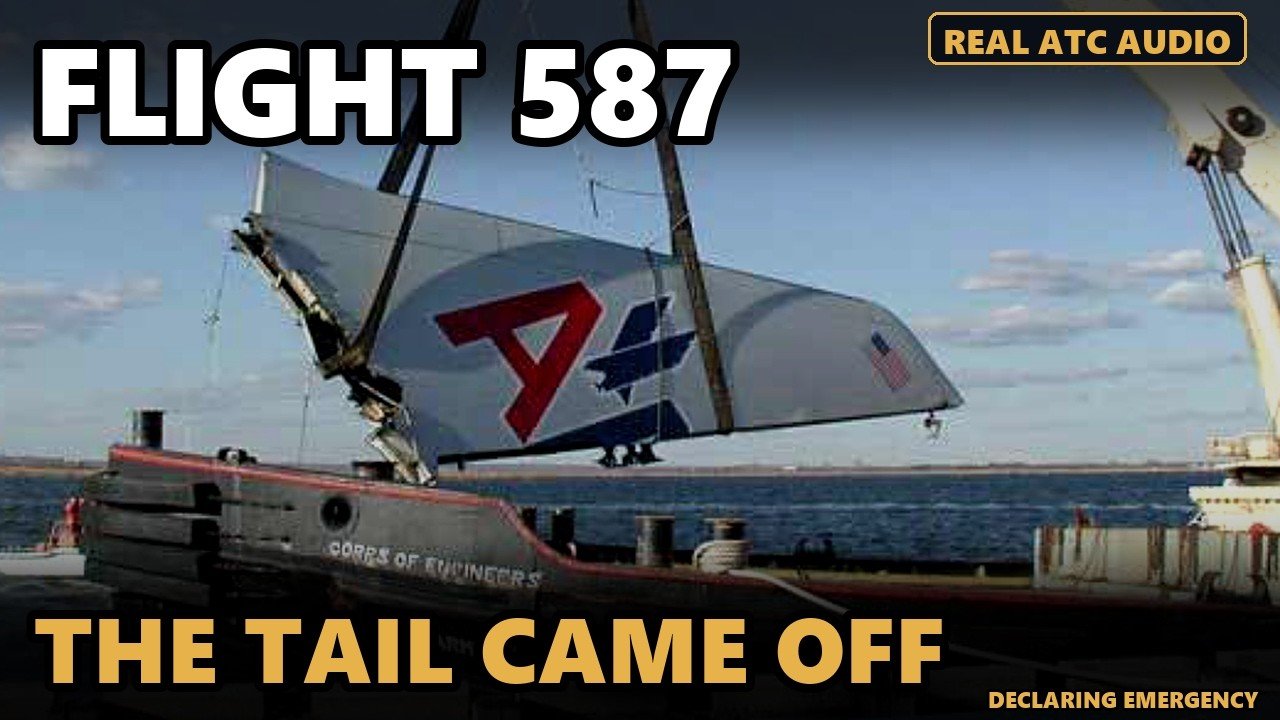
This video sets the real air traffic control recordings from 12 November 2001 against the NTSB's findings on American Airlines Flight 587. It follows the Airbus A300 from taxi behind a Japan Air Lines 747 to the moment its tail fin broke off over Queens, and the controllers' confusion afterwards. All 260 people on board and 5 on the ground died.
Full written account
This video plays the recorded radio from Kennedy tower and New York departure on the morning of 12 November 2001 and explains each stage with the NTSB's findings. It is a short, clear account of what controllers heard and what they could not see.
Taxi and take-off
Flight 587, an Airbus A300 with 260 people on board, taxied for runway 31L behind a Japan Air Lines Boeing 747. The tower cautioned the crew about wake turbulence, the rough air a heavy jet leaves behind it. Flight 587 lifted off about 1 minute 40 seconds after the 747 and was never closer than 4.3 nautical miles. The NTSB found that the tower met the FAA's wake turbulence spacing rules.
The last radio call
The crew checked in with New York departure at 1,300 feet, climbing. Departure cleared them higher and then turned them toward a fix named WAVEY. The crew's readback, "Direct WAVEY", was the last radio call from Flight 587.
What the flight data recorder showed
As the controller gave that turn, the flight data recorder showed a brief jolt, which the NTSB called typical of a minor wake encounter. About 15 seconds later came a second, similar jolt. This time the first officer moved the control wheel quickly and pushed the rudder pedals right, left and right again, with several more full pedal reversals. The NTSB found that these inputs, not the wake, built up an increasing sideslip. The load on the fin reached about twice its design limit load, and at 9:15:58 the fin broke away.
Confusion on the frequency
The aircraft hit the ground about 16 seconds after the fin separated. The first report of a crash did not come from the tower. A pilot on the frequency saw a fireball south of the field and told the controller. Controllers asked whether they were missing any departures and could not say what type of aircraft it was. Some thought it might be a 767. Departure called "American 587" repeatedly and got no answer. Another American crew described a large column of black smoke on the southern shore of Long Island. The fin and rudder had fallen into Jamaica Bay, and the main wreckage struck the corner of Newport Avenue and Beach 131st Street in Belle Harbor. Four homes were destroyed, and three more were substantially damaged.
Why the pilot did it
The NTSB's probable cause was the separation of the vertical stabilizer under loads beyond its ultimate design, created by the first officer's unnecessary and excessive rudder pedal inputs. It named three factors behind those inputs: his tendency to overreact to wake turbulence, his training, including a simulator exercise that portrayed wake turbulence as far more violent than reality, and a rudder system with the lightest pedal forces of any airliner compared. The presenter's closing view, which is his own, is that the report describes a pilot whose training pointed him to a rudder that needed very little force, at a time when many pilots misunderstood how much the tail could take.
Questions this video answers
What caused the tail fin to break off?
The NTSB found the fin separated from loads beyond ultimate design created by the first officer's unnecessary and excessive rudder pedal inputs.
Was the aircraft or fin defective?
No. The airplane was properly maintained, and the NTSB found the fin performed as designed and certified.
Did wake turbulence cause the crash?
The NTSB found the sideslip came from the pedals alone, not the wake. The tower complied with FAA wake turbulence spacing.
How many people died?
All 260 on board and five people on the ground.
Explore related events
Connected by the topic: Pilot error