Japan Air Lines Flight 123: The Faulty Repair Behind 520 Deaths
The short version
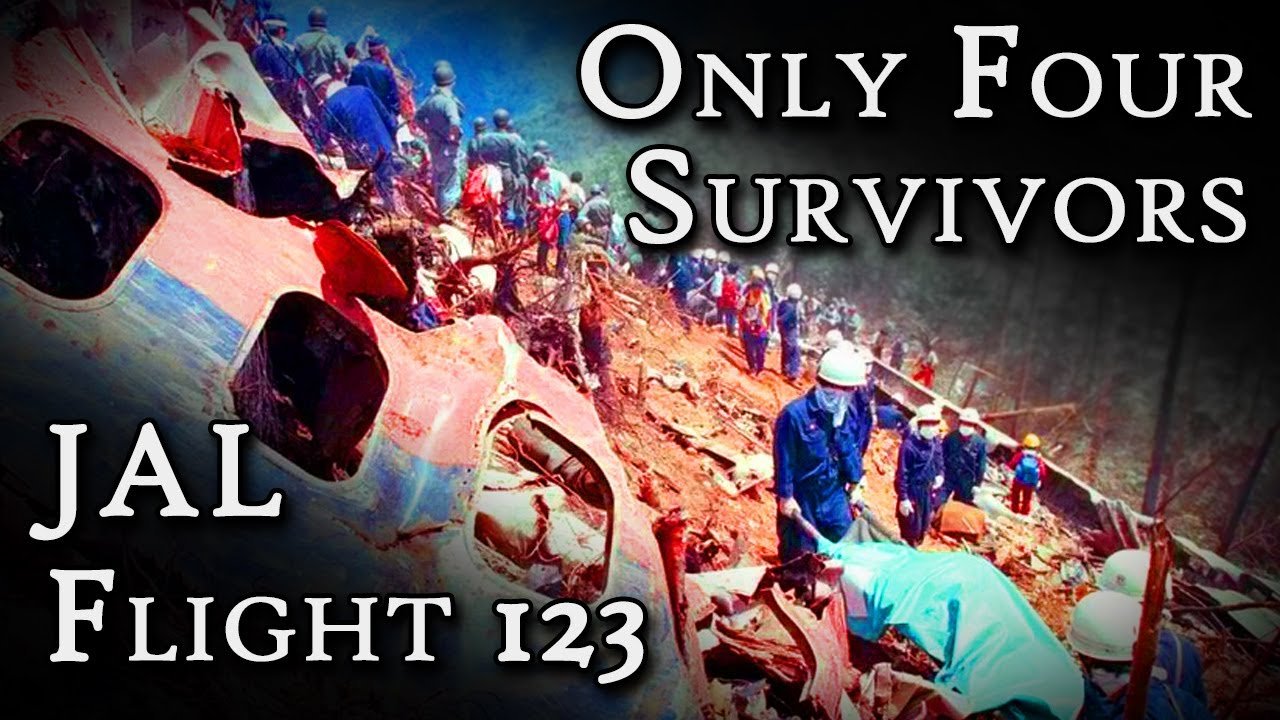
Fascinating Horror's short documentary on Japan Air Lines Flight 123 starts with the aircraft's tail strike at Osaka in 1978 and ends at the memorial on the mountain. It covers the decompression on 12 August 1985, the half-hour struggle to fly the 747 without hydraulics, the night-time rescue and the faulty bulkhead repair. Four of the 524 people on board survived.
Full written account
This short documentary tells the story of Japan Air Lines Flight 123 in chronological order, from the incident that set it up in 1978 to the memorial that families still visit every August. It is narrated over still images and diagrams.
A tail strike in 1978
The video opens on 2 June 1978, when the same Boeing 747, JA8119, bounced on landing at Osaka's Itami Airport and struck its tail on the runway. Several passengers were hurt, and the aircraft was repaired and returned to service. The narrator explains why Japan Air Lines flew 747s with high-density seating on short domestic routes.
The flight
On the evening of 12 August 1985 the aircraft took off from Tokyo Haneda at 6:12 p.m. for Osaka, almost full because of the Obon holiday. On board were 509 passengers and 15 crew. The cockpit crew were Captain Masami Takahama, First Officer Yutaka Sasaki and Flight Engineer Hiroshi Fukuda. At 6:24 p.m., near 24,000 feet, a loud bang was heard, the cabin filled with mist and the oxygen masks dropped. The captain is heard saying that something has exploded. The flight engineer reported that hydraulic pressure was falling.
Thirty minutes without controls
The narrator explains the phugoid cycle the aircraft fell into, climbing and diving repeatedly, and the dutch roll caused by the loss of the vertical fin. Witnesses on the ground said it flew "like a drunken bird". The video says hypoxia slowed the crew's responses. The crew tried to use the engines, the flaps and the landing gear to steer. The video says that at 6:55 p.m. the right flaps were lowered and engine power was increased, and the aircraft rolled steeply and dived towards the mountains. At 6:56 p.m. it struck a ridge.
The rescue
A US Air Force C-130 found the crash site that night, but the rescue was led by Japanese forces, and a helicopter that overflew the wreckage in the dark reported no sign of survivors. Ground teams reached the site the next morning and found four survivors. The narrator reads from the account of off-duty purser Yumi Ochiai, who heard other survivors calling out during the night. The video says that as many as 40 people may have survived the impact but died before help arrived. That figure is not from the investigation report.
The repair
The video summarises the finding of Japan's Aircraft Accident Investigation Commission: the 1978 repair of the rear pressure bulkhead, carried out by Boeing, was done improperly. Over thousands of flights the joint cracked until it failed. It then covers the public reaction, the compensation paid by Japan Air Lines and the resignation of its president. It suggests that the accident led instructor Denny Fitch to practise flying without hydraulics, experience he later used as a passenger helping the crew of United Airlines Flight 232.
Note: the video describes the repair as "two separate plates" instead of one continuous plate. The investigation found that a splice plate narrower than required and a filler were used instead of one splice plate, so part of the joint was held by one row of rivets instead of two.
Questions this video answers
What happened to Japan Airlines Flight 123?
A Boeing 747 was flying from Tokyo Haneda to Osaka International on 12 August 1985 when a loud bang and sudden decompression occurred at 24,400 feet. Hydraulic lines were severed, the crew lost control, and the aircraft hit a mountain ridge at Mount Takamagahara.
How many people died and survived?
There were 524 people on board (15 staff and 509 passengers). Four survived and 520 died.
What caused the crash?
The investigation found that a 1978 tail-strike repair had been done improperly, with two separate plates used instead of one continuous plate. Over thousands of takeoff and landing cycles the plate weakened and broke apart, cutting the hydraulic lines.
What happened to Japan Airlines afterwards?
Japan Airlines paid families around 780 million yen and the company's president resigned.
Explore related events
Connected by the topic: Boeing 747