US Airways Flight 1549: The Bird Strike and the NTSB’s Findings
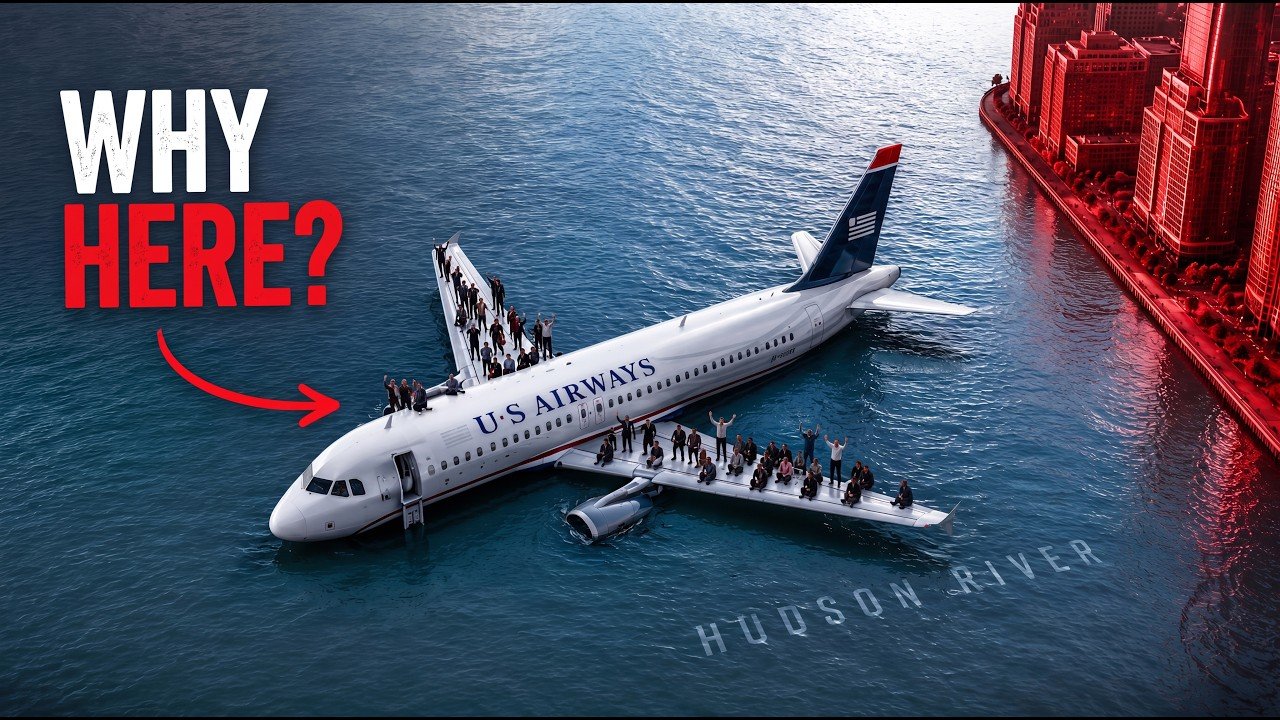
The short version
This narrated documentary tells the story of US Airways Flight 1549 from its departure from LaGuardia on 15 January 2009 to the rescue on the Hudson, then covers the NTSB investigation. It explains the size of the geese, the simulator tests of a return to the airport, and the recommendations that followed. All 155 people on board survived.
Full written account
This 19-minute documentary on US Airways Flight 1549 is a single narration built on the NTSB report and the cockpit and radio recordings. It covers the flight, the evacuation and the investigation in roughly equal parts.
A routine departure
The Airbus A320, flying as Cactus 1549 from LaGuardia to Charlotte, carried 150 passengers, including one lap-held infant, and five crew. Captain Chesley Sullenberger, 57, had flown for decades. First Officer Jeffrey Skiles, 49, had more than 15,000 hours in total but only 37 hours on the A320. The aircraft was cleared for takeoff from runway 4 at about 3:24 p.m.
The golden time
The documentary describes the bird strike, the sudden silence of the engines and what it calls the golden time: the short window when the crew's first decisions decide the outcome. It highlights the captain's decision to start the auxiliary power unit straight away, which kept the A320 in normal law with its protections all the way to the water. The captain's mayday is played, along with the exchanges with controller Patrick Harten, who offered LaGuardia and Teterboro before hearing "We're going to be in the Hudson."
On the water
The narration describes the impact, the left engine tearing away, and the evacuation onto the wings and the forward slide/rafts while the aft exits were unusable. Ferries and other boats arrived within minutes. Captain Sullenberger walked the cabin as the water rose and was the last to leave.
The investigation
The engines contained the remains of Canada geese weighing about 8 pounds each, and at least two were ingested by each engine, according to the video. Engines at the time had to show they could ingest a single 4-pound bird. The NTSB's simulator runs showed that landing back at LaGuardia was possible only with an immediate turn and no time to assess the situation. When the runs allowed even a 35-second delay, they failed. The documentary sets out the NTSB's probable cause and its recommendations on bird-strike testing, engine certification, dual engine failure training, ditching procedures and passenger safety.
Note: the NTSB found remains of at least two geese in the left engine and at least one in the right; the video says at least two in each.
For more on why birds are a hazard to aircraft, see our guide to bird strikes.
Questions this video answers
What caused US Airways Flight 1549 to lose power?
A flock of Canada geese was ingested into both engines about 2 minutes after takeoff, at 3:27 p.m., causing an almost total loss of thrust.
Did everyone survive?
Yes. All 155 people aboard survived: 150 passengers, including one lap-held infant, and five crew members.
How long did the crew have after the bird strike?
The crew had about 3 and 1/2 minutes from the bird strike to the ditching. The touchdown was at approximately 3:30 p.m.
Why did the captain land on the Hudson instead of an airport?
Sullenberger judged that a return to LaGuardia or a diversion to Teterboro could not be reached. The Hudson was wide, relatively free of obstructions and lined with ferry terminals. The NTSB concluded the decision was the correct one.
What did the NTSB conclude?
The NTSB determined the probable cause was the ingestion of large birds into each engine, causing an almost total loss of thrust in both engines and the subsequent ditching.
Explore related events
Connected by the topic: Airbus A320