Swissair Flight 551: Landing an MD-81 With a Smoke-Filled Cockpit
The short version
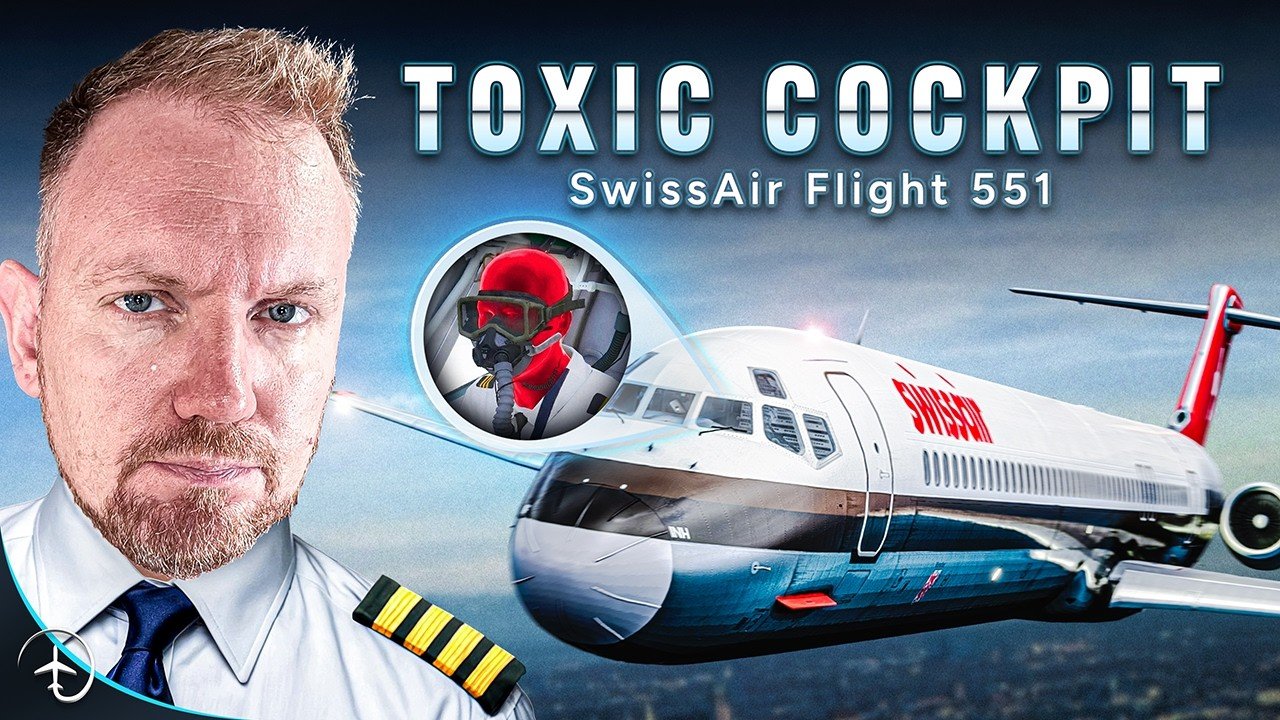
Ten minutes out of Munich, a worn emergency power switch began to smoulder in the overhead panel of Swissair Flight 551, filling the MD-81's cockpit with thick smoke and knocking out the captain's instruments. The pilots turned back at once and landed on runway 08R 13 minutes later, seeing the runway only in glimpses. The video explains how the switch overheated, why the smoke checklist could not be completed and what the incident showed five years before Swissair 111.
Full written account
On 16 October 1993, a Swissair MD-81 flying from Munich to Zurich as Flight 551 filled with smoke from an overheating switch above the pilots' heads. The crew turned back immediately and landed in Munich 13 minutes later, unable to see the runway for much of the approach. All 95 people on board survived. The video, presented by an airline captain, explains how close it came and why it matters for Swissair 111.
A short hop to Zurich
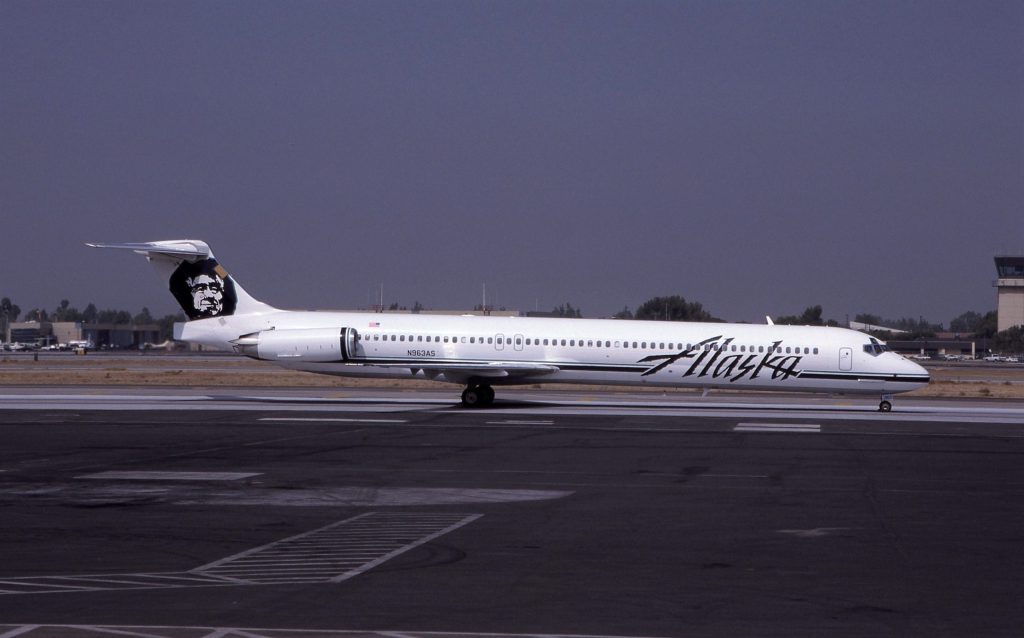
The MD-81, a stretched development of the DC-9 with two tail-mounted Pratt & Whitney JT8D engines, had arrived from Zurich that morning. For the return, 88 passengers boarded with 2 pilots and 5 cabin crew. The captain, a training captain with 11,600 hours, 6,600 on type, was flying; the first officer had 2,800 hours. The weather was fine.
The flight took off from runway 26L at 09:35 and levelled at flight level 180. At about 150 nautical miles, it was one of the shortest routes in the Swissair network.
A smell, then smoke
The captain first noticed a smell he took for the galley ovens heating breakfast rolls. Then white smoke appeared, and a flight attendant at the cockpit door pointed to the overhead panel where it was pouring out. The acrid smell suggested an electrical source.
With the aircraft only about 50 nautical miles from Munich, the captain decided to go back. The first officer radioed: "We have some electrical smoke developing in the cockpit. Request clearance back to Munich immediately." The pilots put on oxygen masks and smoke goggles but at first declined to declare an emergency. The captain made a calm announcement to passengers, in English only.
The video stresses how much this early decision mattered: tests have shown that an uncontrolled fire can destroy an aircraft in under 20 minutes.
The checklist makes it worse
Turning back, the jet was flying at about 420 knots, roughly seven minutes from the airport, so the crew had to slow down and descend while handling the emergency. The separate masks and goggles restricted vision and made radio calls hard to understand.
The "Electrical smoke in cockpit" checklist began by splitting the electrical system and switching off the right generator. When the first officer did that, almost all of the captain's instruments failed and the smoke thickened. At 09:51 the crew declared an emergency. The generator was switched back on but the instruments did not recover, and at 09:53 the captain said: "I can't fly anymore. I don't have any instruments. Your controls."
Inside the emergency power switch
The video explains the MD-81's electrical system. The emergency power switch connects the emergency AC and DC buses either to the left generator in normal operation or to the battery in an emergency, so high currents pass through it in either position. Each time such a switch is operated, tiny arcs wear its contacts. Worn contacts have higher resistance and heat up.
One contact had worn so far that it heated the switch until wiring insulation and nearby components charred. There was not enough material for an open flame; instead the heat broke down insulation and produced dense toxic smoke that left a greasy film on every surface, including the pilots' goggles and the windscreen. It caused the intermittent failure of the emergency AC bus, which powered the captain's instruments. The timing of the failure when the generator was switched off was probably coincidental.
Why stopping the checklist helped
The checklist was three pages long, and even completing it would not have stopped the smoke. It ended with opening the cockpit windows and door to clear the smoke, which fire experts later judged could have fed the fire. The smoke became so thick that the crew could not read it anyway.
An approach almost blind
Smoke deposits were so heavy that the crew could not read the ILS frequency for runway 08R from their charts and had to ask for it. At 09:54 the controller cleared them for a visual approach; the crew replied that they could not see the runway, and he gave them radar vectors to the ILS instead.
They saw the runway at 09:55, then lost it again. The captain took control, had to hand it back because he could not read his airspeed, then took over again near 500 ft, when the first officer called "150" knots and the runway was in view. The first officer fanned smoke away with the checklist and confirmed the gear was down. The MD-81 landed at 09:58, but during the roll-out the smoke cut off the view outside and the captain made a maximum-braking stop.
Evacuation
All 88 passengers and 7 crew evacuated. German investigators recorded minor injuries to 14 passengers and one flight attendant, mostly from sliding off the wings. The tail slide did not deploy because a transport pin had not been removed when it was installed. Smoke kept pouring out until firefighters disconnected the battery. The switch was later found completely charred.
What the investigation recommended
The investigators found the switch design dated from 1959, with no performance specification or service life limit, and that modern aircraft put far greater loads on it. Crews moved it to check battery voltage before every flight, so it was cycled several times a day. The report recommended a limit of 10,000 operations, after which the switch must be replaced, and moving high-current switching out of the cockpit. McDonnell Douglas issued a service bulletin setting the limit, and the FAA made it mandatory.
A warning before Swissair 111
Swissair 551 was classed as an operational incident and received little attention. Five years later, Swissair Flight 111 was lost to an in-flight fire off Nova Scotia. Afterwards, an industry task force added "at any time" items to smoke procedures, including the instruction to consider an immediate landing whenever the situation becomes unmanageable. On Flight 551 the smoke made that decision for the crew. The video ends with today's leading cabin fire risk: lithium-ion batteries in passengers' devices.
Questions this video answers
What caused the fire on Swissair Flight 551?
Investigators determined that the electrical fire began in the emergency power switch. Damage prevented identification of the exact point of origin within it.
Did everyone survive?
Yes. All 88 passengers and seven crew members evacuated safely, although 14 people sustained minor injuries while sliding down from the wings.
Where did Flight 551 land?
It returned to Munich and landed on runway 08 right at 09:58 local time.
Why did the pilots stop working through the smoke checklist?
The smoke became so dense that they could no longer read it. The procedure would not have stopped the smoke, and investigators found that opening the cockpit windows and door as prescribed could have accelerated the fire.
What safety recommendation followed the investigation?
The investigation recommended a 10,000-cycle usage limit for the emergency power switch, after which it would require replacement.
Explore related events
Connected by the topic: McDonnell Douglas MD-80