Alaska Airlines Flight 261: Two Hours With a Jammed Stabiliser
The short version
Green Dot Aviation's animated documentary follows Alaska Airlines Flight 261 on 31 January 2000, from the climb out of Puerto Vallarta, when the stabiliser jammed, to the final inverted dive off California. It explains what was happening inside the tail as the jackscrew wore through, and the maintenance practices and checklist changes the investigation led to.
Full written account
Green Dot Aviation tells the story of Alaska Airlines Flight 261 with animation of the aircraft and of the jackscrew inside its tail, intercut with the crew's decisions. It is a good companion to the Mentour Pilot episode on this page, with more on the flight and less on the maintenance history.
The flight
The MD-83 left Puerto Vallarta for San Francisco in the afternoon of 31 January 2000, with Captain Ted Thompson and First Officer Bill Tansky in the cockpit. The first officer engaged the autopilot at about 6,000 feet. Minutes later the trim stopped working. The video explains how the pilots normally trim the stabiliser with the pickle switches on the control columns, and why, when the autopilot could no longer move it, there were only two explanations: the trim motors had failed, or the stabiliser had jammed.
Inside the tail
The animation shows the jackscrew and its nut pressing against each other, which the narrator compares to tectonic plates. The crew believed they had an electrical fault in the trim motor, and the video points out that their checklist did not tell them to land at the nearest suitable airport if they could not fix it. They continued towards San Francisco, then planned to divert to Los Angeles.
The first dive
While trying to free the stabiliser, the crew used the trim again. The stabiliser moved beyond its maximum nose-down position and the aircraft dived. The overspeed warning sounded, and the pilots had to pull with great force to recover. The captain spoke to the passengers, and the crew asked for a descent to test the aircraft's handling. The narrator explains why a test over the water made sense, and why the first officer's view, that they should leave the trim alone and land while the aircraft was controllable, was the wise one.
Upside down
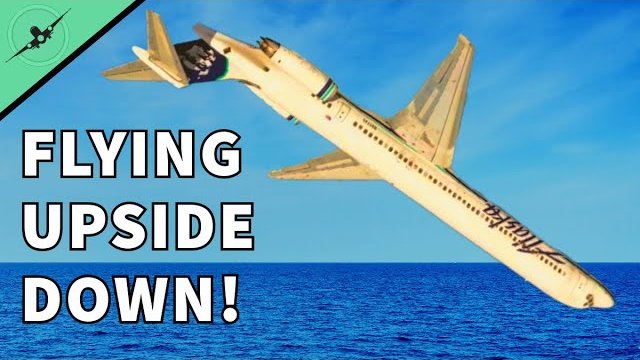
The jackscrew then failed completely, and the aircraft pitched down and rolled over. The narrator describes the captain's attempt to fly inverted, which briefly raised the nose, before the engines stalled and the aircraft struck the sea.
Afterwards
The video summarises the investigation: poor adherence to procedures in the airline's maintenance department, lubrication that was often not done properly, and checklists that were later changed to discourage repeated attempts at a fix that is not working and to tell pilots to divert when they have a significant flight control problem. It notes that the pilots were posthumously awarded the Air Line Pilots Association's Gold Medal and suggests that keeping the aircraft over the water spared people on the ground.
Note: the video refers to 86 passengers and crew; the NTSB report gives 88 people on board (83 passengers and 5 crew).
Questions this video answers
When did Alaska Airlines flight 261 crash?
January 31, 2000.
Where was flight 261 headed?
It was bound for Seattle from Puerto Vallarta, Mexico, with a stopover at San Francisco.
How many people were on board and did anyone survive?
The video states 83 passengers and five crew boarded; there were no survivors.
What went wrong with the aircraft?
The jack screw in the tail that moved the horizontal stabilizer jammed. Its nut threads had worn to about one-tenth of their original thickness, and the threads finally gave way. The video ties this to infrequent maintenance inspections and a jack screw that was essentially dry.
Why did the pilots divert to Los Angeles?
They decided to land at Los Angeles because of the flight control problems, even though the airline dispatcher pressed them to continue to San Francisco.
How did the crash happen?
The aircraft dived from about 31,000 feet, was brought out of the dive, then dived again after a bang from the tail. The captain rolled it inverted, and it hit the ocean at 20 minutes past 4 that afternoon.
Explore related events
Connected by the topic: McDonnell Douglas MD-80